01 · Why Bhadrachalam
A river, a saint and a state wedding
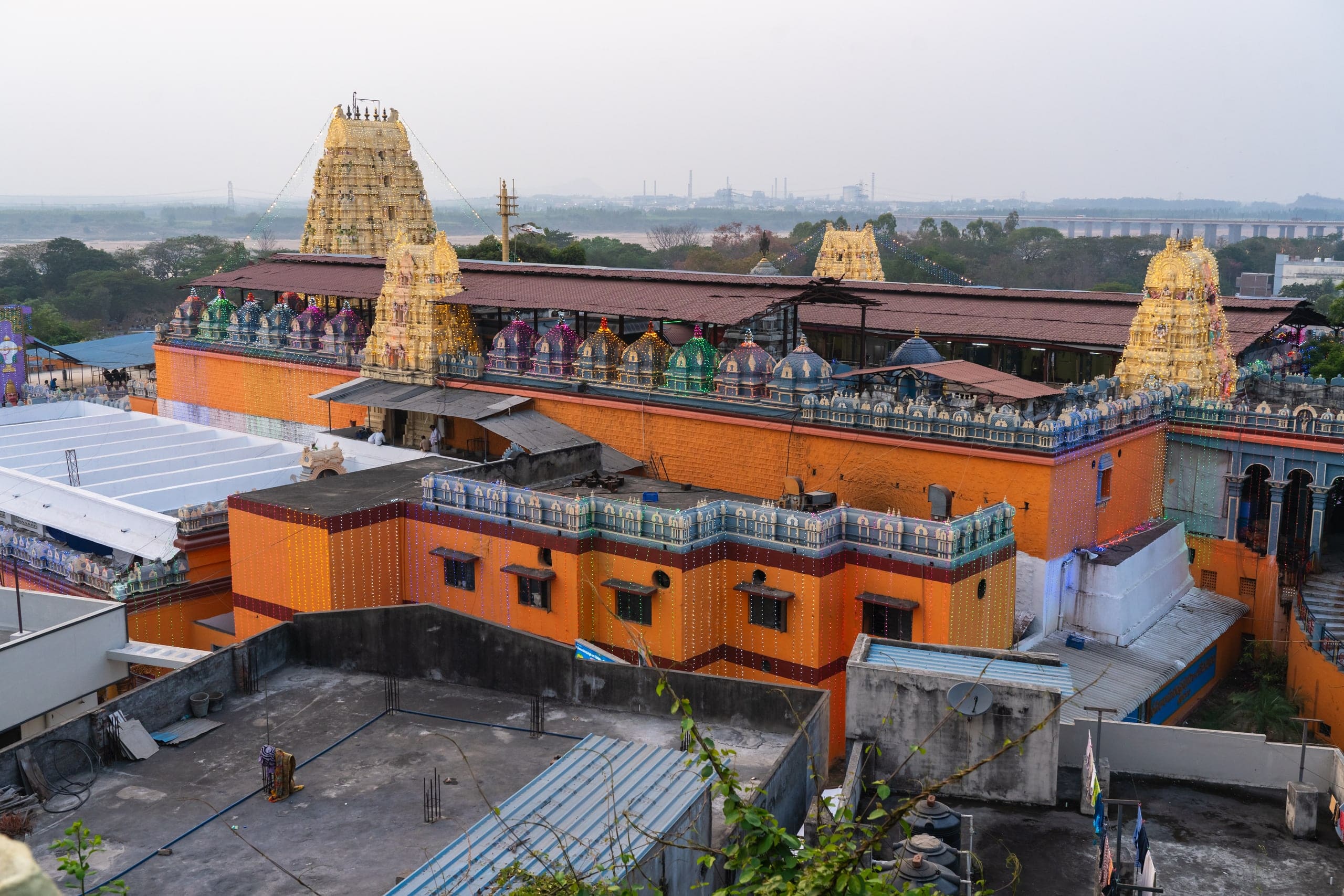
Bhadrachalam is a living Rāma temple on the Godāvarī. Its story draws on four kinds of evidence that began at different times: an epic, the colonial records, a saint known mostly from his songs, and the written orders of a modern state.
The epic names the river, not the town S1. The temple’s remembered builder, Kancherla Gopanna, called Rāmadāsu, was already the subject of widely sung Telugu poems by 1915 S4. No contemporary Golconda record of him has been found; the one possible near-contemporary outside mention is known only through Rao’s quotation S5S10. Today the wedding of Sītā and Rāma on Rāma Navamī is the occasion for gifts from the state, under orders the Devasthanam names S8.
The temple describes its Rāma as four-armed, holding Viṣṇu’s conch and discus, and calls him Vaikuṇṭha Rāma S7. That is the temple’s description; this page shows no images from the sanctum.
- Established
Directly documented by primary evidence or Indian archaeological record; not in serious dispute.
- Strong inference
Well supported by epigraphy, chronology or architectural analysis, but reconstructed rather than explicitly recorded.
- Debated
Scholarly opinion differs, or the surviving evidence does not settle the question.
- Later tradition
Preserved in literary or regional tradition later than the monument itself; not contemporary testimony.
- Unknown
No surviving primary record establishes this, and it is left open rather than inferred.
- Investigative claim
A modern hypothesis or observation, recorded and examined here without being treated as established fact.
02 · The epic
What Vālmīki actually says
In the critical edition of the Rāmāyaṇa, the sage Agastya sends Rāma to Pañcavaṭī, near the Godāvarī. The text gives a river and a route. It does not give a town.
Verse numbers here follow the critical edition; the southern vulgate numbers the same passage 3.13, with the same distance, river and route S2.
Vālmīki Rāmāyaṇa · CE 3.12.13, 3.12.18
Agastya’s directions
ito dviyojane … pañcavaṭy abhiviśrutaḥ … godāvaryāḥ samīpe
Two yojanas from here … the renowned Pañcavaṭī … near the Godāvarī.
Text: Critical Edition (Baroda), as in the source library. Translation: Vedika’s own, literal. Phrases joined with ellipses; nothing in the passage names a modern place.
What the epic says
- Agastya sends Rāma to Pañcavaṭī, “two yojanas from here”, near the Godāvarī S1S2.
- The directions are a route: past a great madhuka forest, northward towards a banyan, then up on high ground not far from a mountain S1.
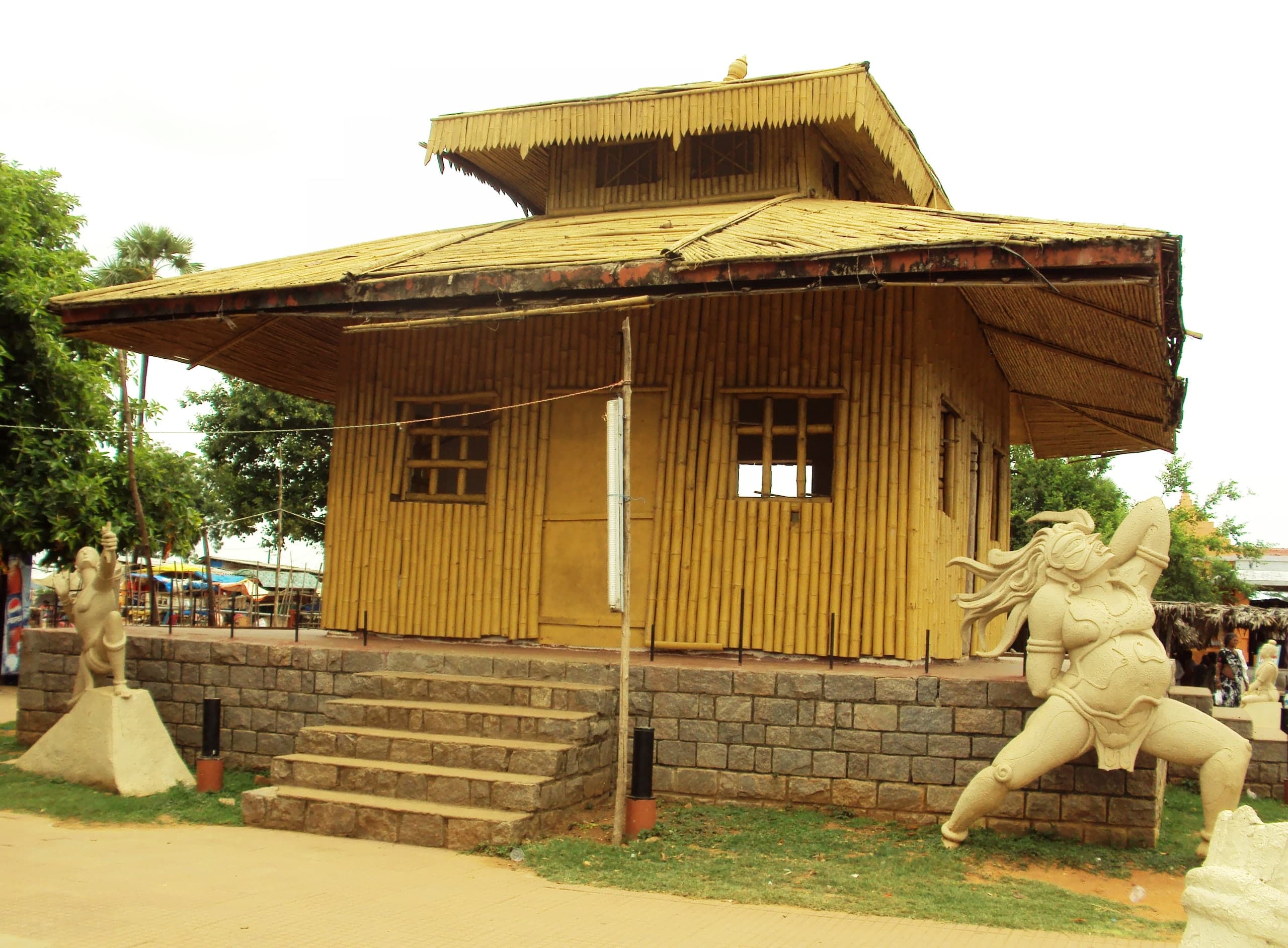
- At Pañcavaṭī Lakṣmaṇa builds a spacious parṇaśālā, a leaf-hut of packed earth on posts with bamboo, with the Godāvarī “neither too far nor too near” S1.
What it does not say
- It names no modern town: neither Bhadrachalam nor Nashik is named, and parṇaśālā appears only as the word for the hut, never as a place S1.
- It does not locate Agastya’s own hermitage in terms that map onto a modern site S1.
- Its hut is a temporary shelter; nothing in the text points to a surviving site S1.
03 · Sacred geography
Two Pañcavaṭīs on one river
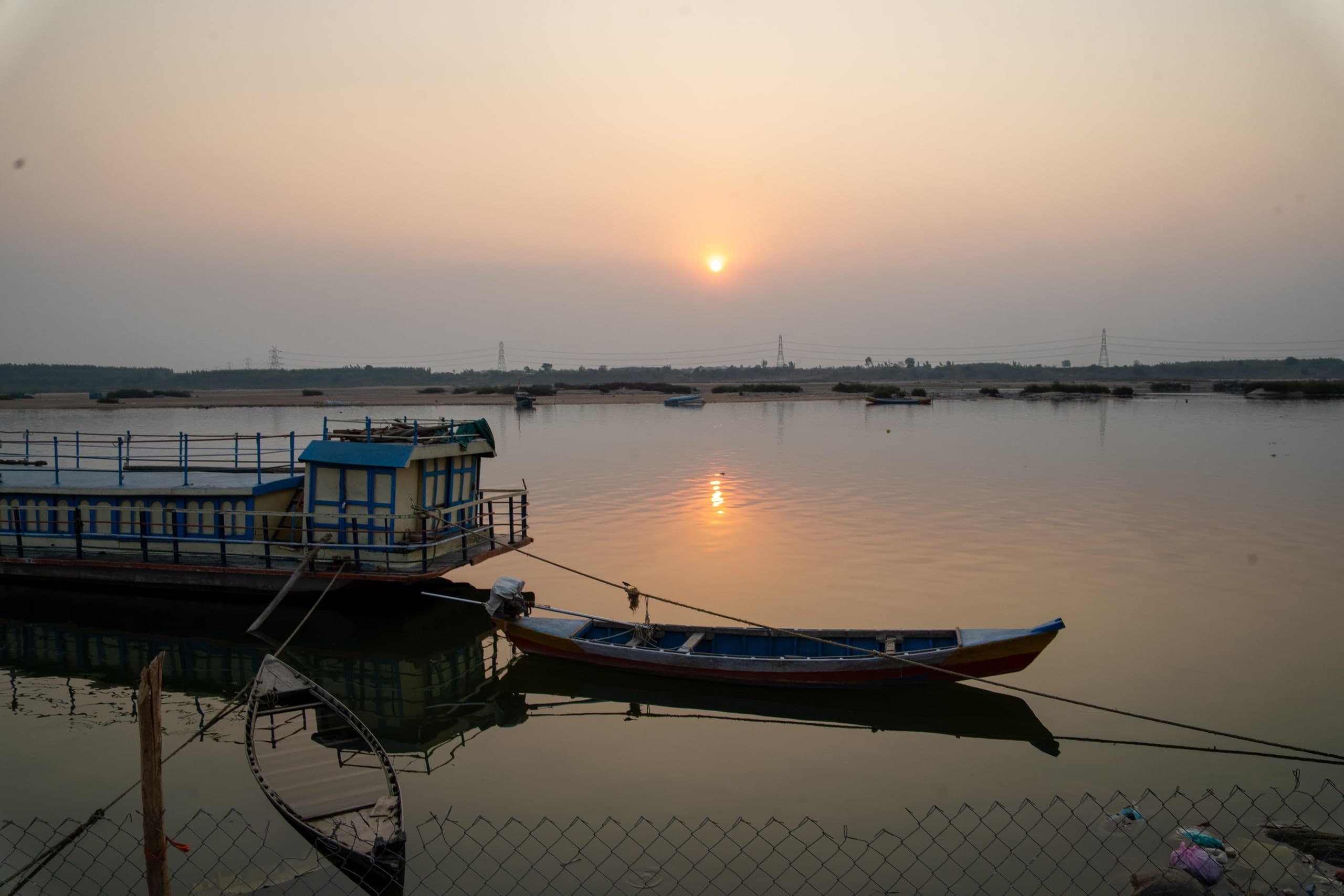
Two Godāvarī landscapes claim to be Pañcavaṭī: Nashik in Maharashtra, and the Bhadrachalam and Parnasala country in Telangana. The text fits both and decides neither S1S4S7S9.
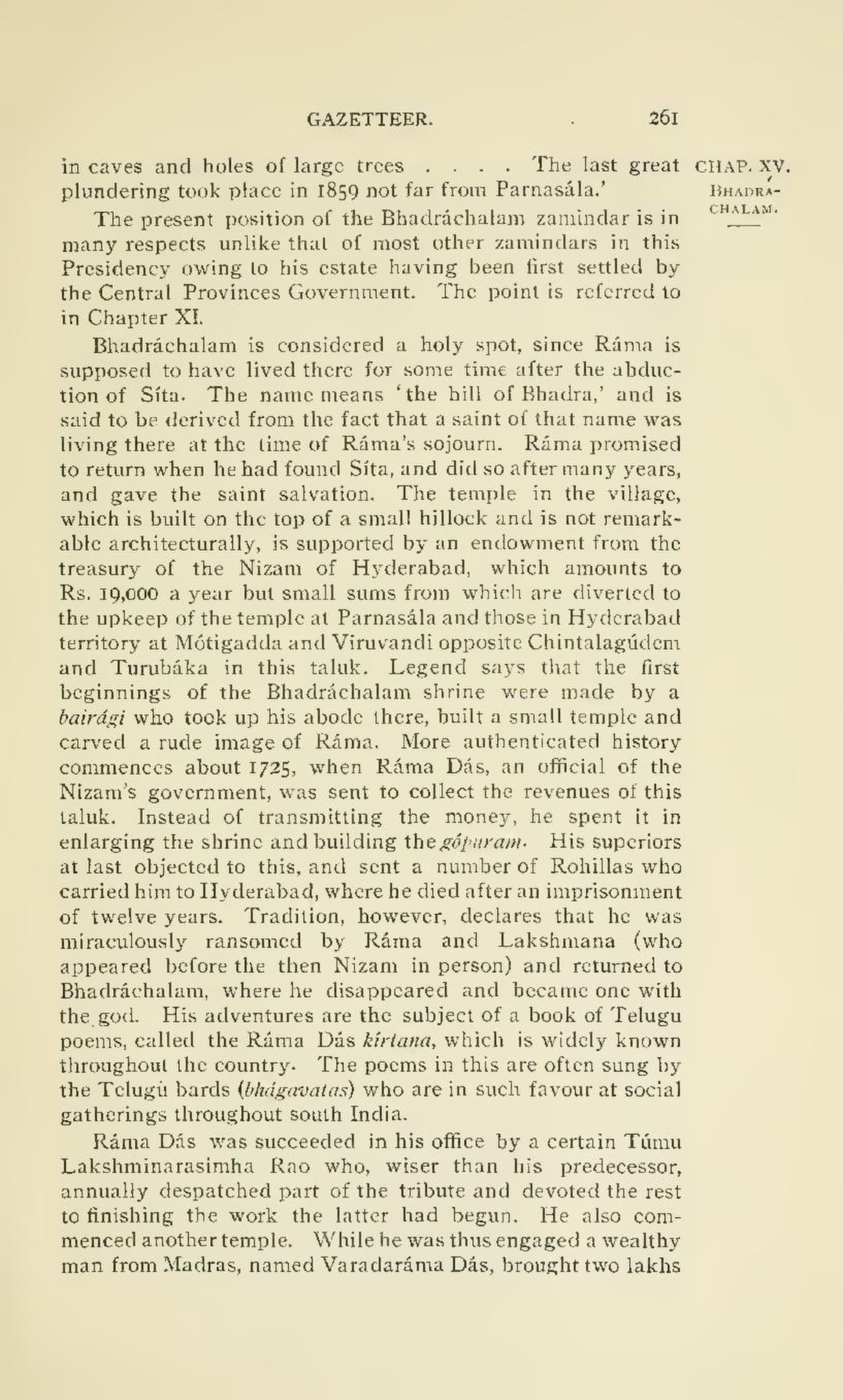
The 1915 gazetteer places Parnasala twenty-two miles by road north of Bhadrachalam, with a small festival held at the same time as Bhadrachalam’s Chaitra festival S4. Cain noted in 1876 that no old temples remained near it S3.
The name Bhadrachalam is explained as “the hill of Bhadra”, after a sage or devotee who, tradition says, was granted Rāma’s presence on this hill S4S7.
| Place | What is said | Status |
|---|---|---|
| The text | Pañcavaṭī lies two yojanas from Agastya’s hermitage, near the Godāvarī; no town is named S1. | Established · in the text |
| Nashik | In 1883 the Nasik gazetteer recorded a Brahman tradition that puts Agastya’s hermitage near Nasik and Pañcavaṭī on the Godāvarī opposite the town S9. | Later tradition |
| Parnasala | In 1876 local people showed visitors the stone where Sītā sat, marks called her footprints and yellow stains said to come from her drying clothes, and named the village as the scene of her abduction S3S4. | Later tradition |
| Bhadrachalam | In the same nineteenth-century telling, Bhadrachalam is where Rāma lived after the abduction S3S4. Today the Devasthanam places Pañcavaṭī and the parṇaśālā in this landscape S7. | Later tradition |
| Which is Vālmīki’s Pañcavaṭī? | Not decided by the text, which fits both landscapes S1. Vedika does not choose between them. | Debated |
The text decides neither
Both traditions rest on the same few verses: a river, a distance from a hermitage that cannot itself be located, and a route S1. Neither Nashik nor Bhadrachalam is named in them.
04 · Origins
Before Gopanna: a bairāgi, or Dammakka
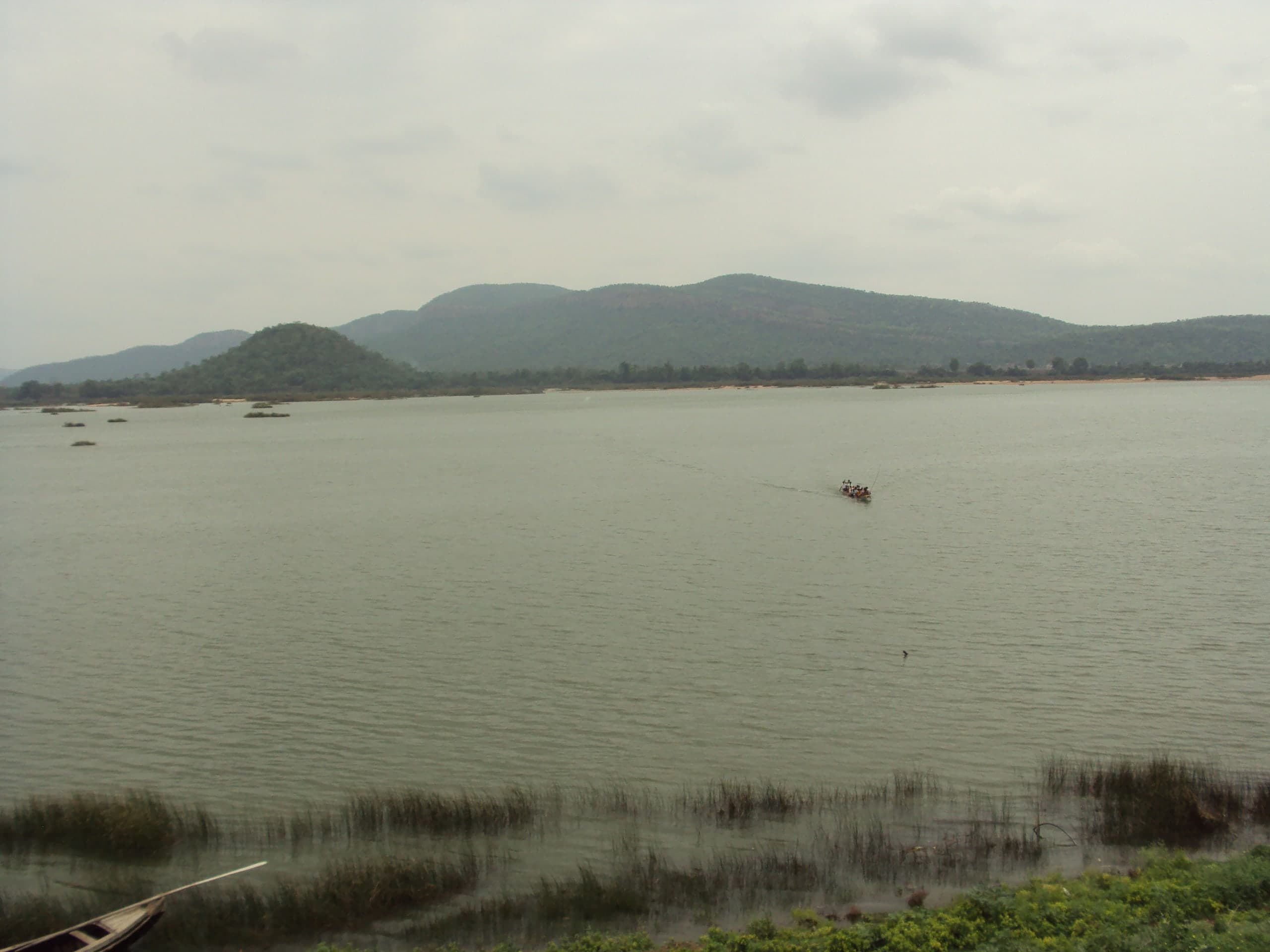
Every account agrees that a shrine or an image stood here before Gopanna’s work. They disagree on what it was, and none dates it S3S4S7.
The accounts of 1876 and 1915 say a bairāgi, a wandering ascetic, settled here, built a small temple and carved a rough image of Rāma S3S4.
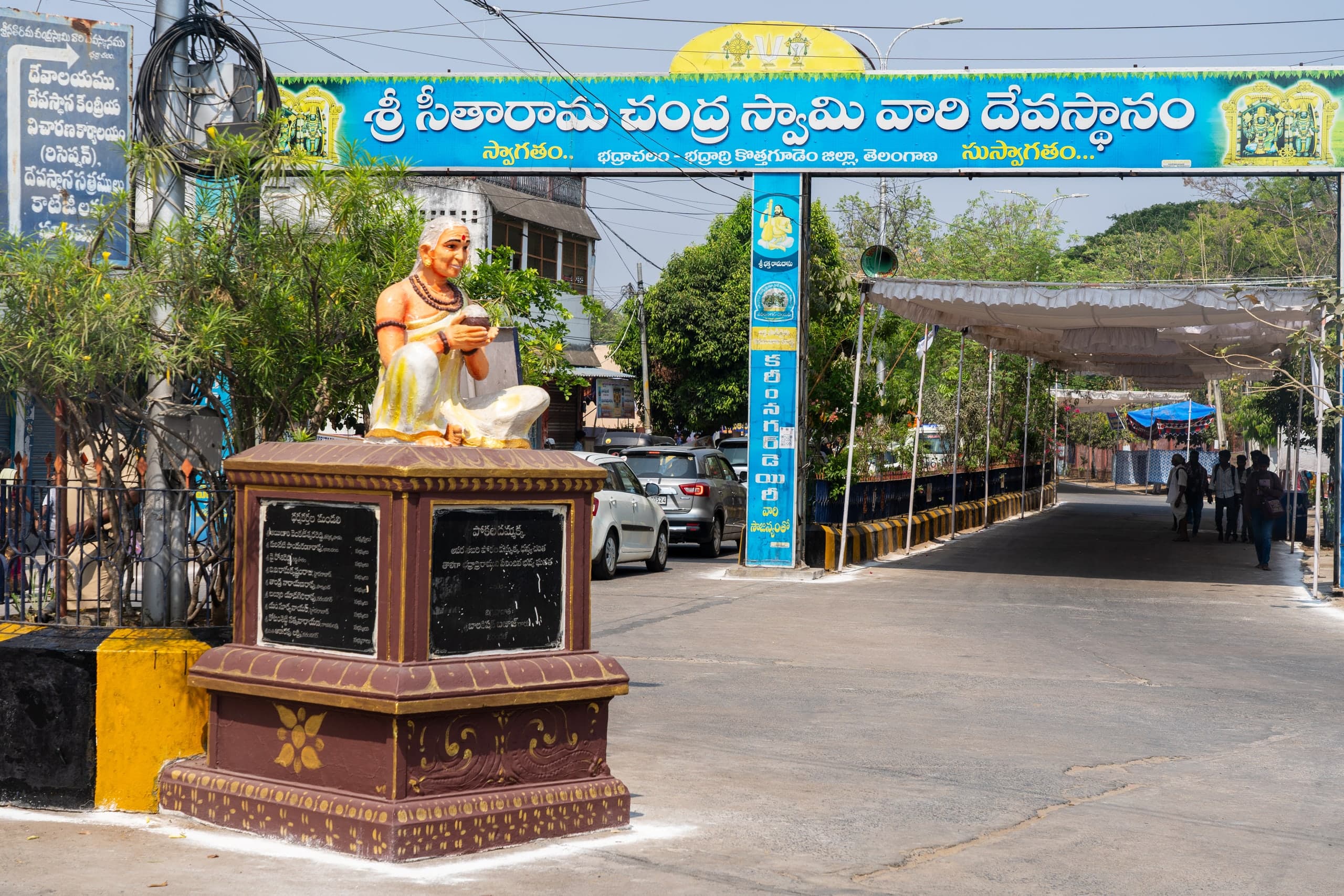
The temple’s own history tells it differently. There, Pokala Dammakka, a forest-dwelling woman of a nearby village, is the first to find and worship the image, which had lain in an anthill; the history places her in the seventeenth century S7. She does not appear in the 1876 or 1915 accounts S3S4.
Two beginnings
The bairāgi is the version the earliest written accounts heard. Dammakka is the version the temple tells today. Neither can be checked against a dated record S3S4S7.
05 · History
The saint and the sultanate
Kancherla Gopanna, called Rāmadāsu, is remembered as a revenue official at Bhadrachalam under the Qutb Shahi sultans of Golconda, and a nephew of the ministers Akkanna and Madanna S5S6S7. Every modern account agrees on this. No contemporary Golconda record of him has been found; the one possible near-contemporary outside mention is known only through Rao’s quotation S5S10.
The 1876 and 1915 accounts make him an official of the Nizam’s government instead S3S4. Every account consulted says he spent revenue he had collected on building or enlarging the temple and was imprisoned for twelve years S3S4S5S6S7. That is agreement among later accounts, not a record of the event.
Undated
An earlier shrine
A bairāgi’s temple, or Dammakka’s image: the accounts differ, and none gives a date S3S4S7.
Disputed
Gopanna’s service and imprisonment
Rao’s chronology runs from 1650 to 1677 S5. Narayana Rao and Shulman place him under Abu’l-Hasan Tana Shah, who reigned from 1672 S6. Cain wrote “about 150 years ago” and the 1915 gazetteer “about 1725”, under the Nizam S3S4. No date is adopted here.
Undated
His successors
The nineteenth-century accounts credit later work to his successor in office, Tumu Lakshminarasimha, helped by a wealthy Madras devotee, Varada Ramadasu S3S4. Rao places the two around 1832 S5.
1766 (reported)
The images carried away
Rao says that when an adventurer named Ibrahim Khan threatened the temple, the priests took the images to a Godāvarī village in Polavaram taluk for five years S5. He gives no source, and the earlier accounts do not mention it.
1840–41
The Nizam’s sanad
An endowment from the Nizam of Hyderabad’s treasury, said to have begun at a lakh of rupees, is fixed at Rs 19,125 a year by a sanad S4. The sanad itself has not been seen. By 1915 the gazetteer gives it as Rs 19,000 a year (p. 261) S4.
1860 · 1874
From Hyderabad to Madras
The Nizam hands the Bhadrachalam and Rekapalli taluks to the British in 1860; they pass to the Madras Presidency in 1874 S3. The earliest written descriptions come from the Madras period.
1876
The first local account found
The missionary John Cain records local legend about Parnasala, the first shrine and Rama Das in the Indian Antiquary S3.
1915
The district gazetteer
The Madras gazetteer calls the temple “not remarkable architecturally” and retells Rama Das’s story, closely following Cain S4.
| Question | What the sources say | Status |
|---|---|---|
| Was he a Qutb Shahi revenue official? | So every modern account says S5S6S7; the 1876 and 1915 accounts call him an official of the Nizam S3S4. No record from Golconda naming him was found. | Strong inference |
| When did he serve? | 1650–1677 in Rao S5; the reign of Tana Shah, from 1672, in Narayana Rao and Shulman S6; “about 1725” in the 1915 gazetteer, which appears to derive from Cain’s “about 150 years ago” S3S4. | Debated |
| Did he spend revenue on the temple and spend twelve years in prison? | Every account consulted says so S3S4S5S6S7; none is a record of the time. | Strong inference |
| How did the imprisonment end? | The 1876 and 1915 accounts say he died in prison at Hyderabad S3S4. The Telugu tradition says he was freed and returned to Bhadrachalam S5S7. Rao also reports a view that Madanna secured a pardon S5. | Debated |
| Is there a contemporary record? | No Golconda record of his appointment, arrest, debt or release was located in this research S5S6; the one possible near-contemporary outside mention is known only through Rao’s quotation S10. | Unknown |
06 · Later tradition
The receipt: the story as tradition tells it
The best-known part of Rāmadāsu’s story is a miracle. It is told here in the tradition’s own terms.
In the devotional story, Gopanna lies in the Sultan’s prison for twelve years for the money he spent on Rāma’s temple. Then Rāma and Lakṣmaṇa come to the Sultan disguised as Gopanna’s servants, called Rāmoji and Lakṣmoji in the Devasthanam’s telling, pay the missing money in gold and take a stamped receipt. The receipt frees him S5S6S7.
Rao quotes an account he attributes to “Hawart and Martin”, possibly Daniel Havart (1693); in Rao’s rendering it says the government jailed Gopanna for misusing funds and that “Lord Sri Rama paid the money” S10S5. The original has not been located. If it is genuine, it shows the story circulating within decades; it would not show that the payment happened.
Much of the life is read out of the songs attributed to him, which speak of prison, debts and “Tanisha” coming to inspect the accounts S5. The songs therefore cannot independently confirm the story.
What the record shows
No Golconda record of the debt, the payment or the release has been found S5S6. The earliest written English accounts, of 1876 and 1915, disagree with the Telugu tradition on whether he was freed: both say he died in prison S3S4.
07 · Literature
The songs: Dāśarathi Śatakamu and the kīrtanas
Whatever the documents lack, the songs are abundant. Gopanna is the author of the Dāśarathi Śatakamu, a Telugu poem of about a hundred verses addressed to Rāma as Daśaratha’s son S5S6.
Around two hundred devotional songs, kīrtanas, are attributed to him; one editor published notations for 137 S5. Which of them are his is unsettled. By 1915 the gazetteer described a book of Telugu poems on his adventures, the ‘Rāma Dās kīrtana’, as widely known, its poems often sung by Telugu bards, the bhāgavatas, at gatherings across south India S4.
Rao reports that music historians treat him as a bridge between the earlier kīrtana composers, such as Annamayya, and the later kṛti composers, and name Tyāgarāja among those he influenced S5. Rao stresses that the songs were made for congregational bhajana singing, not for the concert hall S5.
Rao names Yadavadasu of Bhadrachalam, an eighteenth-century writer, as the earliest of Rāmadāsu’s biographers. The life spread through yakṣagāna and harikathā versions of the Rāmadāsu Caritra S5.
08 · Living tradition
The state wedding
The wedding of Sītā and Rāma, the Sītārāma Kalyāṇam, is performed on Śrī Rāma Navamī, the ninth day of the bright half of Chaitra, at the abhijit hour, during the spring Brahmotsavam S8.
In 1915 the Chaitra festival was said to draw as many as 20,000 people S4. The Devasthanam’s festival page states that the Chief Minister and the Endowments Minister present silk robes and pearls on behalf of the state, under G.O.Ms. No. 1001 of 7 December 1990 and G.O.Ms. No. 215 of 27 April 1995 S8. The page names these as orders of the Government of Andhra Pradesh. The orders themselves were not seen.
Who began the gift is told two ways. The same festival page traces the custom to the time of the Nizam’s government S8. The temple’s history page and the Telugu tradition say Tana Shah ordered it after Rāmadāsu’s release S5S7. The 1915 gazetteer records the Nizam’s cash endowment S4, which is not the same as the wedding gift; neither origin of the gift is documented.
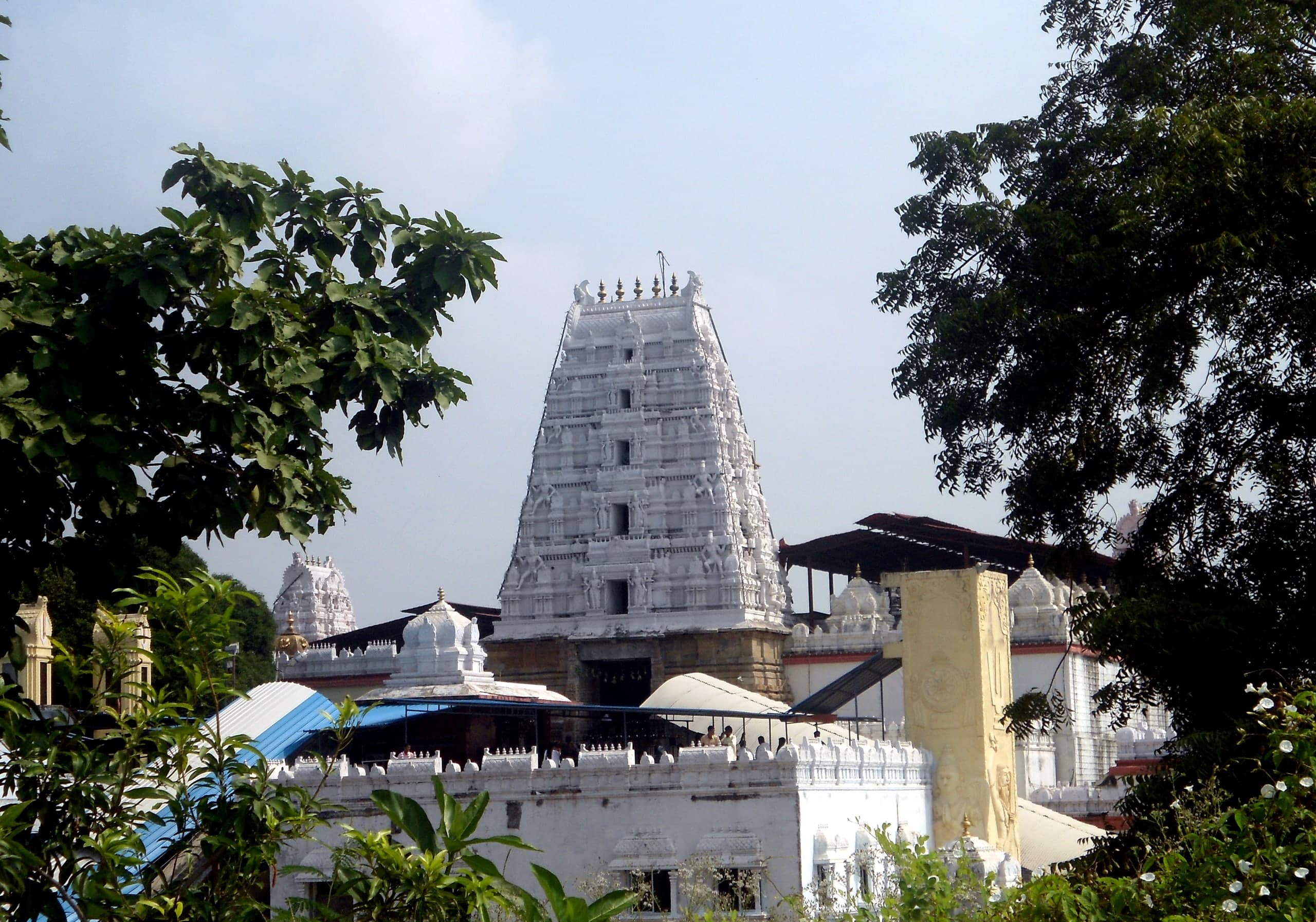
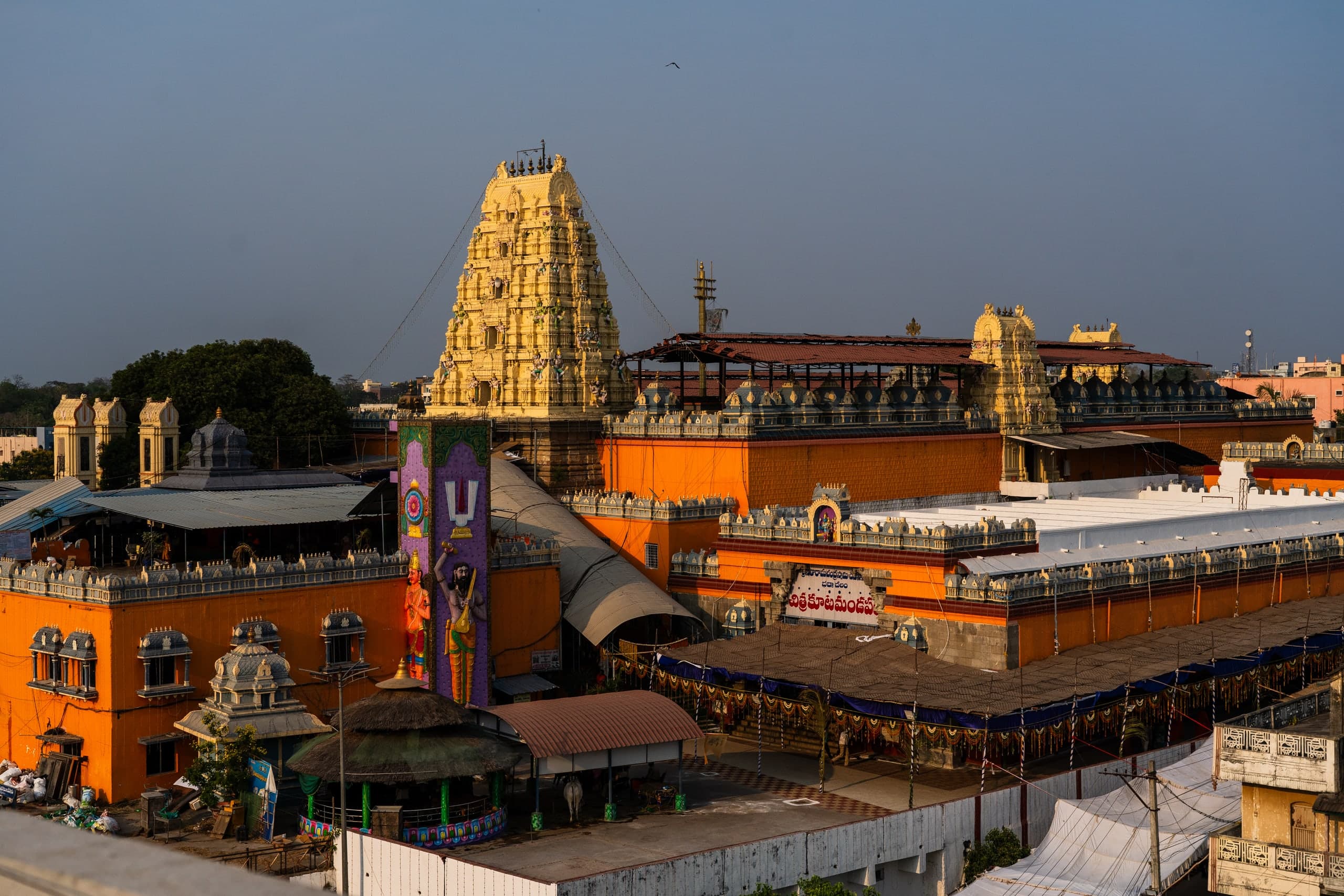
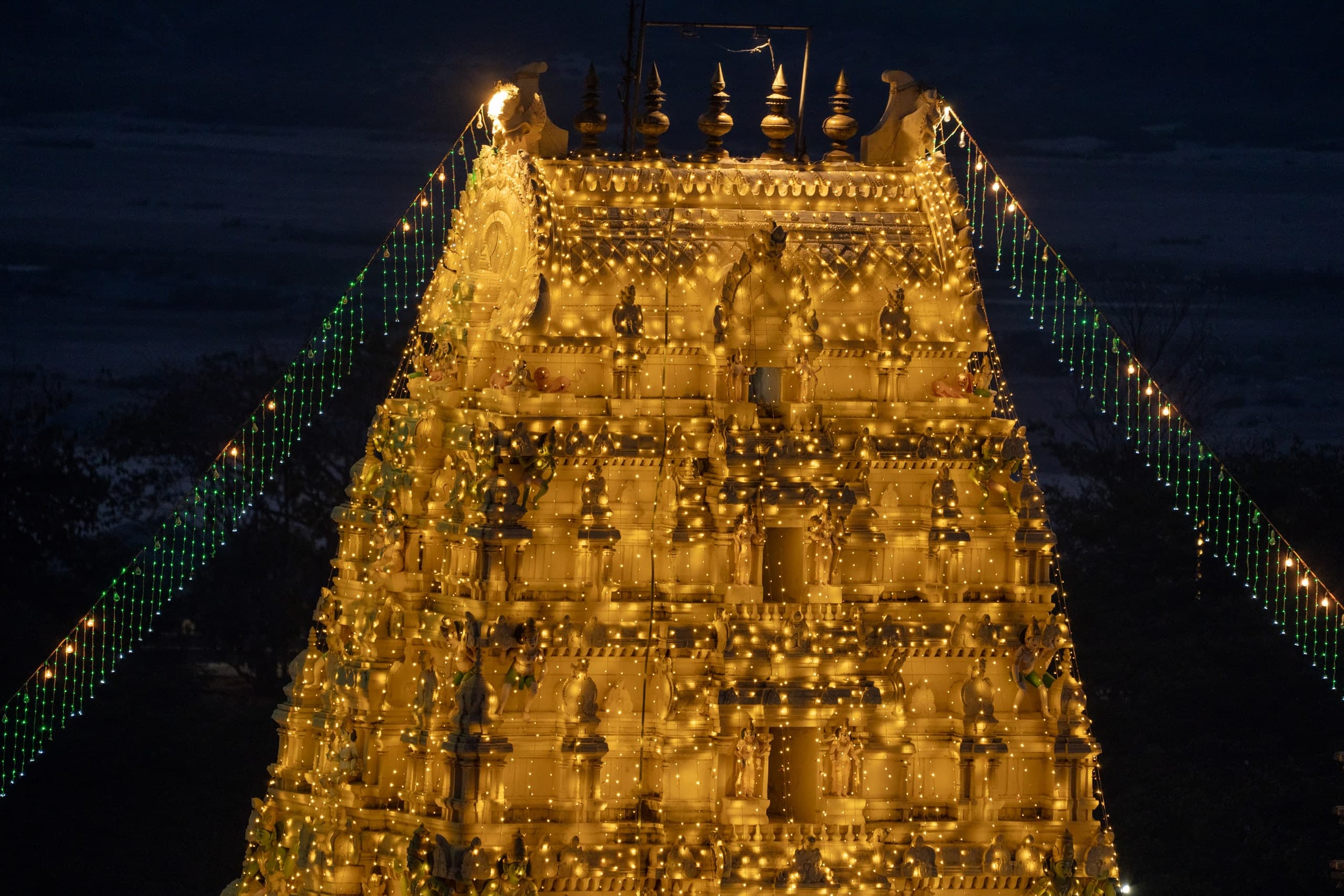
The gazetteer of 1915 called the temple “not remarkable architecturally” S4. No architectural survey or dated plan of it was found. Its gopuras have been repeatedly repainted (white in 2012, gold and ochre by 2024); how much has been rebuilt is not documented.
| Statement | Basis | Status |
|---|---|---|
| The state presents silk robes and pearls at the Kalyāṇam | The Devasthanam’s festival page, citing Government Orders of 1990 and 1995 S8. | Established · on the Devasthanam’s page |
| The Nizam endowed the temple | Stated by the 1915 gazetteer; the sanad of 1840–41 has not been seen S4. | Strong inference |
| Who began the gift | The Nizam’s government, says the festival page S8; Tana Shah, say the history page and the Telugu tradition S5S7. | Debated |
| A Qutb Shahi grant of jāgīrs, inscribed on a stone slab | Reported by Rao, who says the slab was defaced in 1766 and re-inscribed around 1832 S5. No epigraphic record of it was found. Rao names different grantors in different places (Abdullah, 1652; Tana Shah, 1677). | Investigative claim |
| Any visible part of the temple is seventeenth-century | Not established; no survey was found. Repeatedly repainted (white in 2012, gold and ochre by 2024); how much has been rebuilt is not documented. | Unknown |
09 · Evidence
What we know, and what remains open
The epic, the colonial records, the Rāmadāsu tradition and the temple today each have their own evidence.
| Statement | Basis | Status |
|---|---|---|
| In Vālmīki, Pañcavaṭī lies near the Godāvarī | Agastya’s directions in the critical edition S1S2. | Established · in the text |
| Vālmīki names Bhadrachalam, Parnasala or Nashik | Neither Bhadrachalam nor Nashik is named, and parṇaśālā appears only as the word for the hut, never as a place S1. | Established · absent from the text |
| Bhadrachalam or Nashik is Vālmīki’s Pañcavaṭī | Rival traditions; the text fits both and decides neither S1S7S9. | Debated |
| Gopanna was a Qutb Shahi official who spent revenue on the temple | Modern accounts say he served the Qutb Shahis; the 1876 and 1915 accounts say the Nizam. All say he spent revenue on the temple. No Golconda record of his time was seen S3S4S5S6. | Strong inference |
| His dates, and how his imprisonment ended | The sources disagree by up to about seventy-five years, and on whether he was freed S3S4S5S6. | Debated |
| Rāma and Lakṣmaṇa paid the debt and took a receipt | The devotional tradition S5S6S7. | Later tradition |
| Whether the money was repaid, and by whom | No record has been found either way. | Unknown |
| He wrote the Dāśarathi Śatakamu | Accepted by both scholarly sources S5S6. | Established |
Open questions
These are gaps in the surviving record rather than settled conclusions. Each remains open until primary documentation or published scholarship closes it.
- A contemporary Golconda record of Gopanna’s appointment, arrest, debt or release. Seema Singh’s “The 17th century Golconda Documents” (Proceedings of the Indian History Congress, 1993) and Daniel Havart’s Op- en ondergang van Coromandel (1693) have not yet been checked.
- Whether the missing revenue was ever repaid, and by whom.
- The stone slab recording a jāgīr grant, reported by Rao; no epigraphic record of it has been found.
- The reported removal of the images in 1766, which Rao gives without a source.
- An architectural survey that dates any part of the present temple.
- The text of G.O.Ms. No. 1001 (1990) and No. 215 (1995).
- Which of the songs attributed to Rāmadāsu are his.
10 · Sources
Source library
Every citation on this page links here.
- S1Primary text1960–75
Vālmīki Rāmāyaṇa, Critical Edition — Araṇyakāṇḍa
What the epic says about Pañcavaṭī, the Godāvarī and the leaf-hut (CE 3.12–3.14).
Open indexed source ↗ - S2Primary textonline edition
Vālmīki Rāmāyaṇa, southern recension — Araṇyakāṇḍa, sarga 13
Concordance: the southern vulgate’s numbering of Agastya’s directions.
Open indexed source ↗ - S3Archival record1876
The Bhadrachallam and Rekapalli Talukas, Godavari District, South India
The earliest written local account found: a missionary’s record of local legend about Parnasala, the first shrine and Rama Das.
Open indexed source ↗ - S4Archival record1915
Madras District Gazetteers: Godavari, vol. I
The official gazetteer entry for Bhadrachalam and Parnasala (pp. 260–263). Its Rama Das paragraph follows Cain closely.
Open indexed source ↗ - S5Indian scholarship1988
Ramadasu (Makers of Indian Literature)
The fullest accessible biography in the Telugu tradition, with the songs and their influence. Devotional in tone; few primary citations.
Open indexed source ↗ - S6International scholarship2002
Classical Telugu Poetry: An Anthology
A scholarly headnote on Kañcarla Gopanna that frames the repayment explicitly as tradition (pp. 247–248).
Open indexed source ↗ - S7Primary textc. 2024
History & Significance
The temple’s own devotional narrative: evidence for what the living tradition says, not for history.
Open indexed source ↗ - S8Archival recordc. 2024
Temple Festivals
The Devasthanam’s statement of the Kalyāṇam and the state’s gifts, naming the Government Orders of 1990 and 1995.
Open indexed source ↗ - S9Archival record1883
Gazetteer of the Bombay Presidency, vol. XVI: Nasik
The Nashik claim to Pañcavaṭī, as recorded by a comparable colonial gazetteer.
Open indexed source ↗ - S10Archival recordlate 17th century
A European account of Gopanna’s release, as quoted by Rajanikanta Rao
Known only as quoted in English by Rao; attribution to Havart unconfirmed. A possible near-contemporary outside witness.
Open indexed source ↗