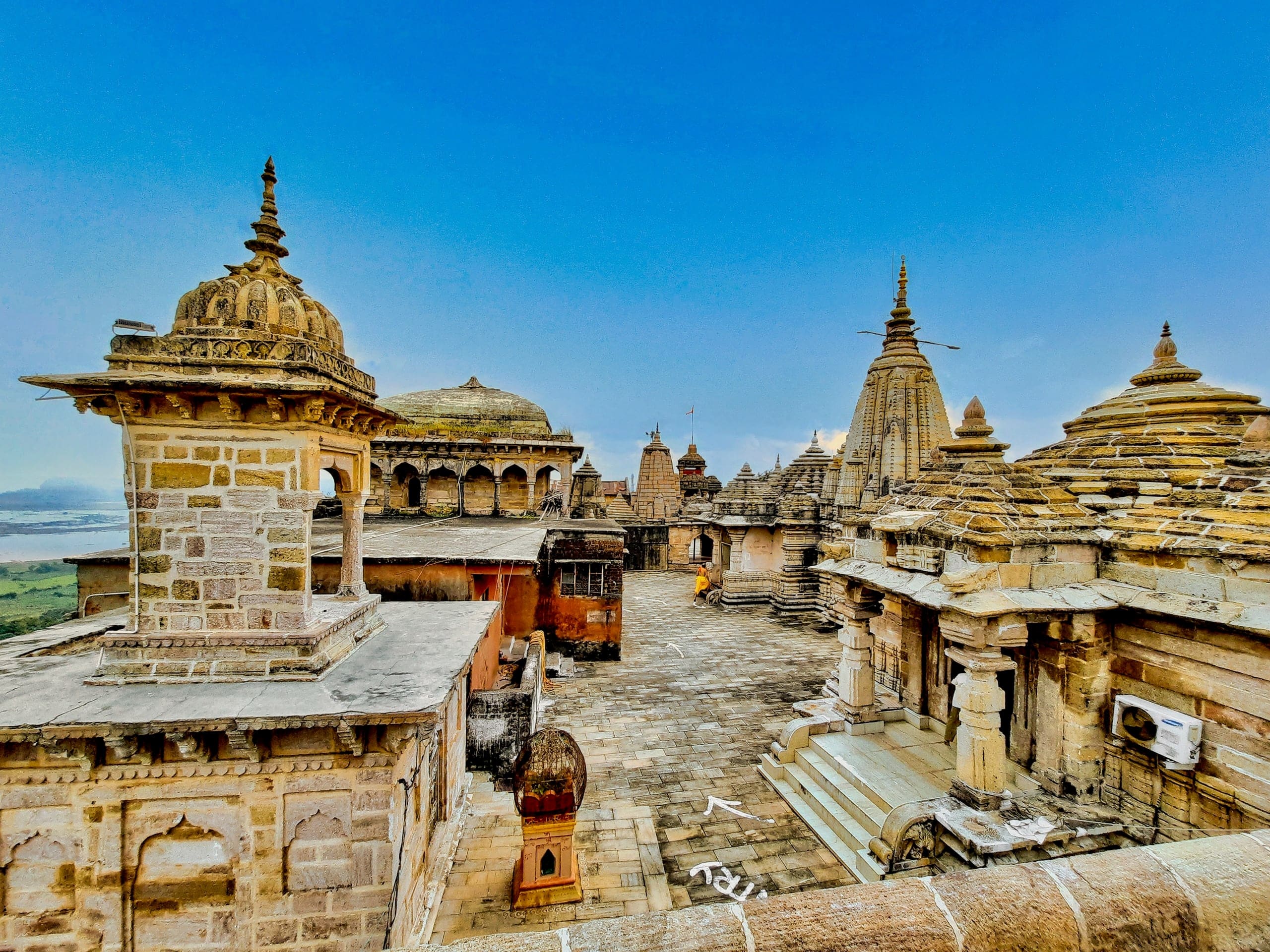
01 · Why Ramtek
A hill called Rāma’s
On Ramtek the stages by which a hill became Rāma’s can be followed in dated evidence: a fifth-century name, standing fifth-century shrines of Viṣṇu’s avatāras, and thirteenth-century inscriptions that make it a Rāma tīrtha S1S4S9.
Ramtek hill lies at about 21.40° N, 79.33° E, in Nagpur district, Maharashtra S12. In the fifth century it was called Rāmagiri, and it stood near the Vākāṭaka capital Nandivardhana, now Nagardhan S1S7.
This page follows the method of the historian Hans Bakker: the useful question is not where the epic’s events happened, but when real places came to be identified with them S7.
No source used here shows a temple building of Rāma on the hill in the fifth century. Mirashi, who read the fifth-century “Lord of Rāmagiri” as Rāma, himself noted that none of the Vākāṭaka temples named in the inscriptions survives S2S9.
- Established
Directly documented by primary evidence or Indian archaeological record; not in serious dispute.
- Strong inference
Well supported by epigraphy, chronology or architectural analysis, but reconstructed rather than explicitly recorded.
- Debated
Scholarly opinion differs, or the surviving evidence does not settle the question.
- Later tradition
Preserved in literary or regional tradition later than the monument itself; not contemporary testimony.
- Unknown
No surviving primary record establishes this, and it is left open rather than inferred.
- Investigative claim
A modern hypothesis or observation, recorded and examined here without being treated as established fact.
02 · Text and tradition
What the poems say, and what they do not
Vālmīki’s critical text does not name Rāmagiri. Kālidāsa does, but he does not say where it is.
Vālmīki’s Rāmāyaṇa (critical edition)
- A search of the critical text finds neither Rāmagiri nor Ramtek S11.
- In the last book, Rāma finds the ascetic Śambūka practising austerities by a large lake on the north side of a mountain called Śaivala, in the south of his realm, and beheads him S11S7.
- The text gives no further location for Śaivala S11.
Text and tradition
That the Meghadūta’s Rāmagiri is Ramtek is a scholarly identification, not an established fact. Mirashi called it certain; Bakker accepts it as the most plausible, but notes that the thirteenth-century inscription on the hill never alludes to the poem S2S9S4. Placing Śambūka’s death at Ramtek is a later tradition, recorded on the hill in the thirteenth century; Vālmīki does not make it S4S11.
03 · Epigraphy
“From the footprints of the Lord of Rāmagiri”
The hill’s name appears in a fifth-century copper-plate grant of the Vākāṭaka queen Prabhāvatīguptā S1.
The grant is dated the twelfth day of the bright half of Kārttika in the nineteenth regnal year of her son Pravarasena II, and gives a field and farm buildings at Aśvatthanagara to Brāhmaṇas S1. The plate gives no absolute year.
The Rāmagiri of the Vākāṭaka inscriptions is identified with Ramtek hill S1S7. Mirashi translates the word pādamūla as “footprints”. Sircar read it as a figure of speech for a temple; Bakker argues for the literal sense S1S9.
The name itself, Rāma’s hill, suggests that the hill was already linked with the hero of the Rāmāyaṇa by the fifth century. That is Bakker’s inference, and a name is not evidence of a temple or a cult S9S7.
Bakker suggests that the main sanctuary was not a temple but an open-air enclosure with an altar bearing the god’s footprints. His evidence is a small footprint tablet, carved with Viṣṇu’s emblems, found at Nagardhan at the foot of the hill S9S7. He calls this a hypothesis, and no excavation has tested it. Bakker places that sanctuary, probably, on the western spur, where the Rāma and Lakṣmaṇa temples stand today S9.
04 · Architecture
A Vaiṣṇava hill: the Vākāṭaka shrines
Work on the hill in the 1980s, led by A. P. Jamkhedkar, showed that it preserves at least six structures from the fifth century S9S4. In Bakker’s reading, the hill was then a sanctuary of Viṣṇu and his avatāras S9S7.
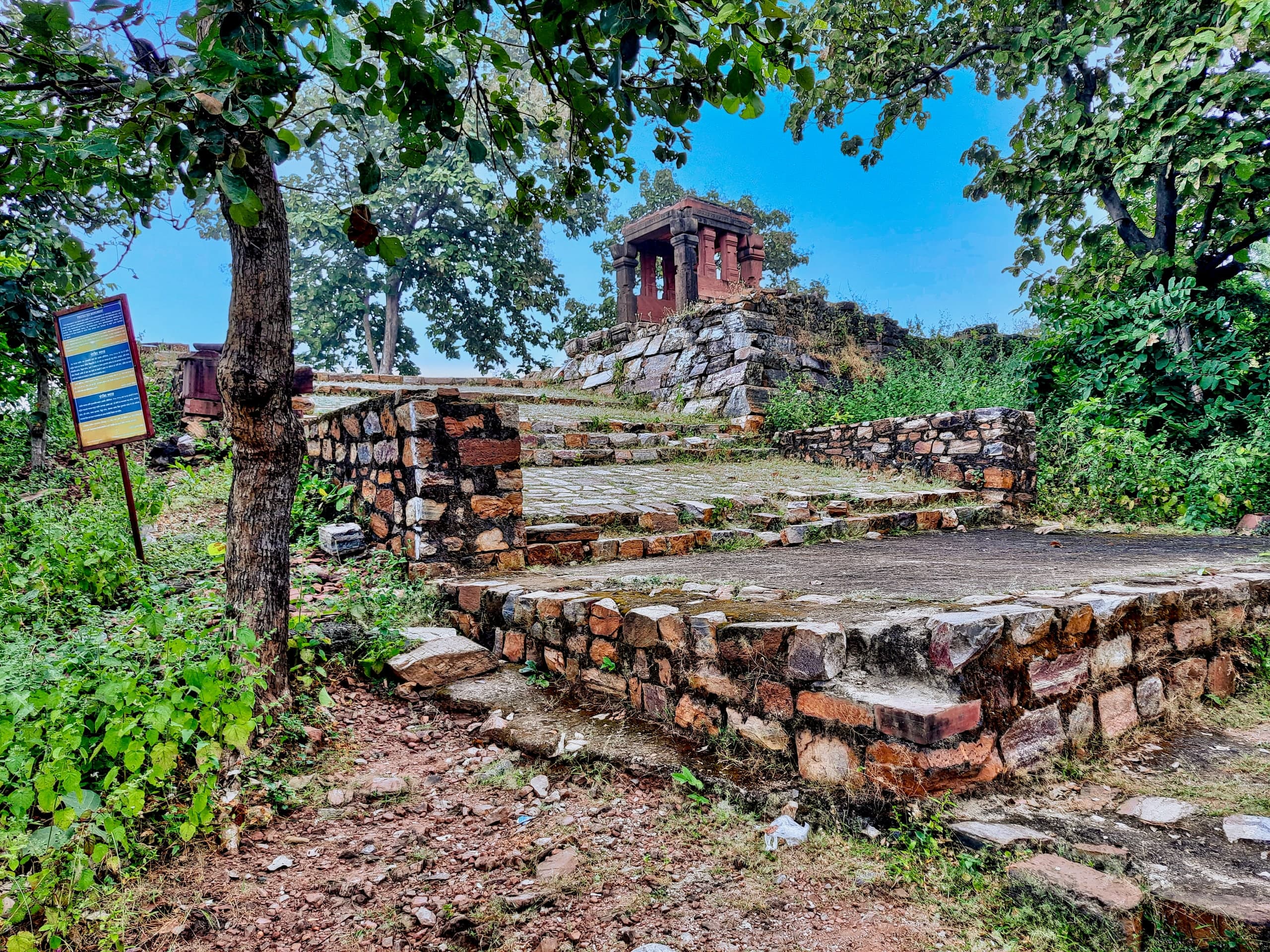
The monuments are shrines of Varāha; two Narasiṃha temples, the Rudra-Narasiṃha and the Kevala-Narasiṃha; the double-shrined Bhogarāma temple; the ruined Trivikrama temple; and, below the summit, the small rock-cut Kapaṭarāma (Guptarāma) shrine and the Siddhanātha cave S9.
Bakker proposes that the Bhogarāma temple, with its two sanctums side by side, was first dedicated to Balarāma and Kṛṣṇa. Its name, he argues, refers to Balarāma, not to Rāma the son of Daśaratha. Today it belongs to the Mahānubhāva sect S9. In his reading, none of the surviving fifth-century shrines is a temple of Rāma S9S7.
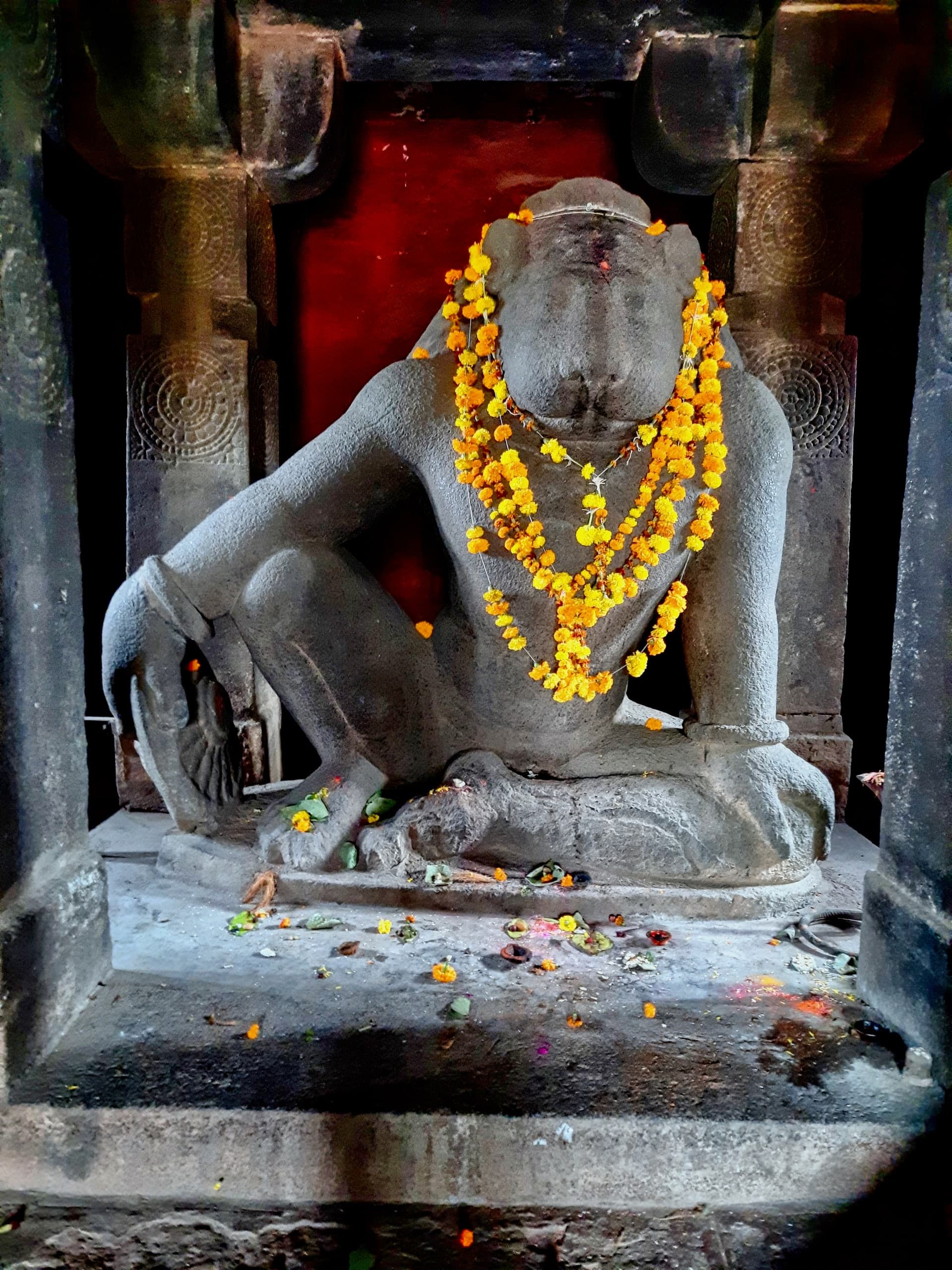
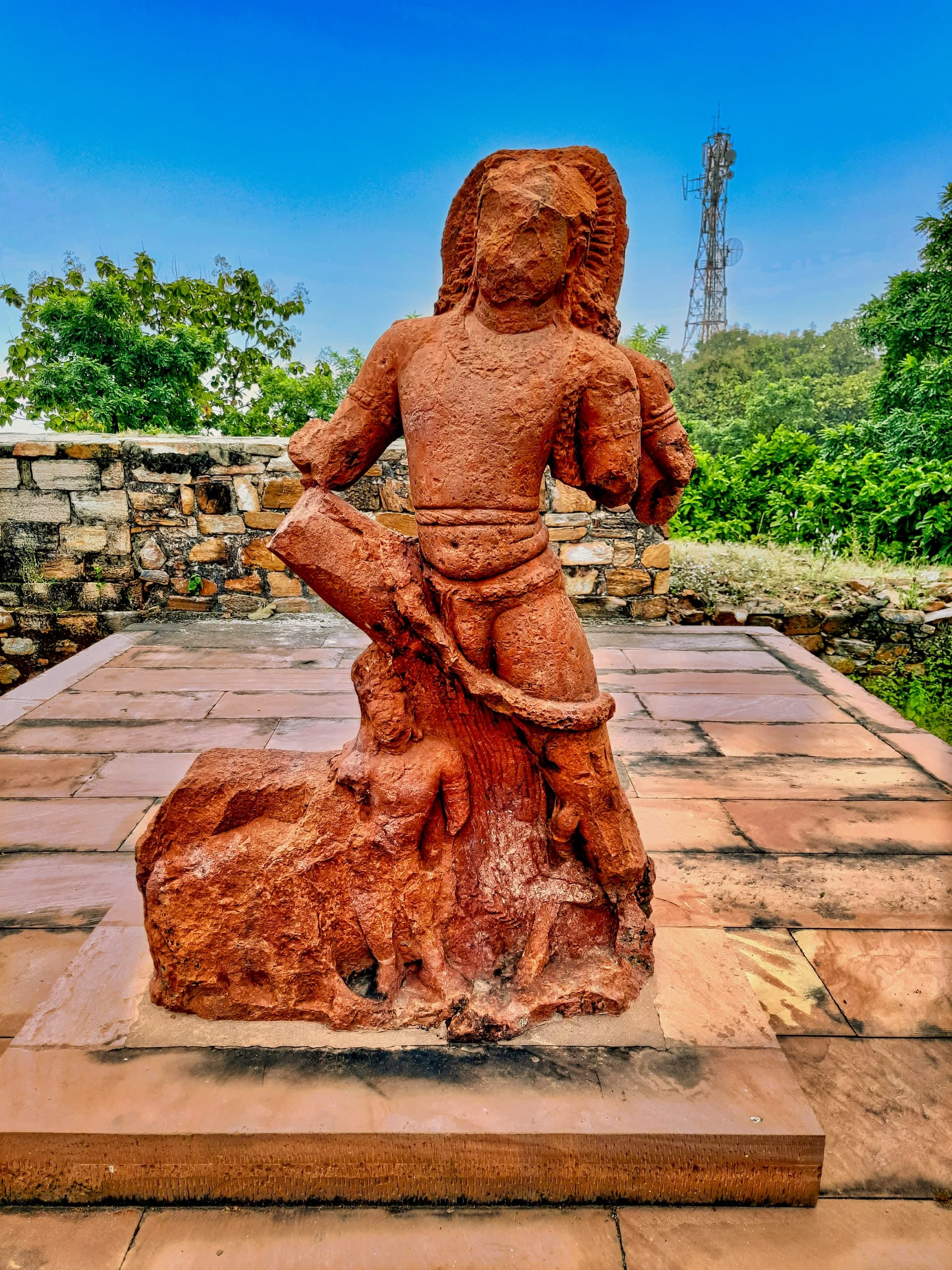
Both Narasiṃha temples hold large, nearly identical seated images of the man-lion, about two metres high S7S9. Bakker argues that this seated type first appears here, and that small replicas at the foot of the hill and early sixth-century imitations elsewhere show pilgrims carrying its fame away S7. He also observes that the early Varāha and Narasiṃha images are carved in dark basalt and the later Trivikrama in red sandstone S6.
The order and exact dates of the shrines are debated, so the sequence below is relative, not firm S4S9S6.
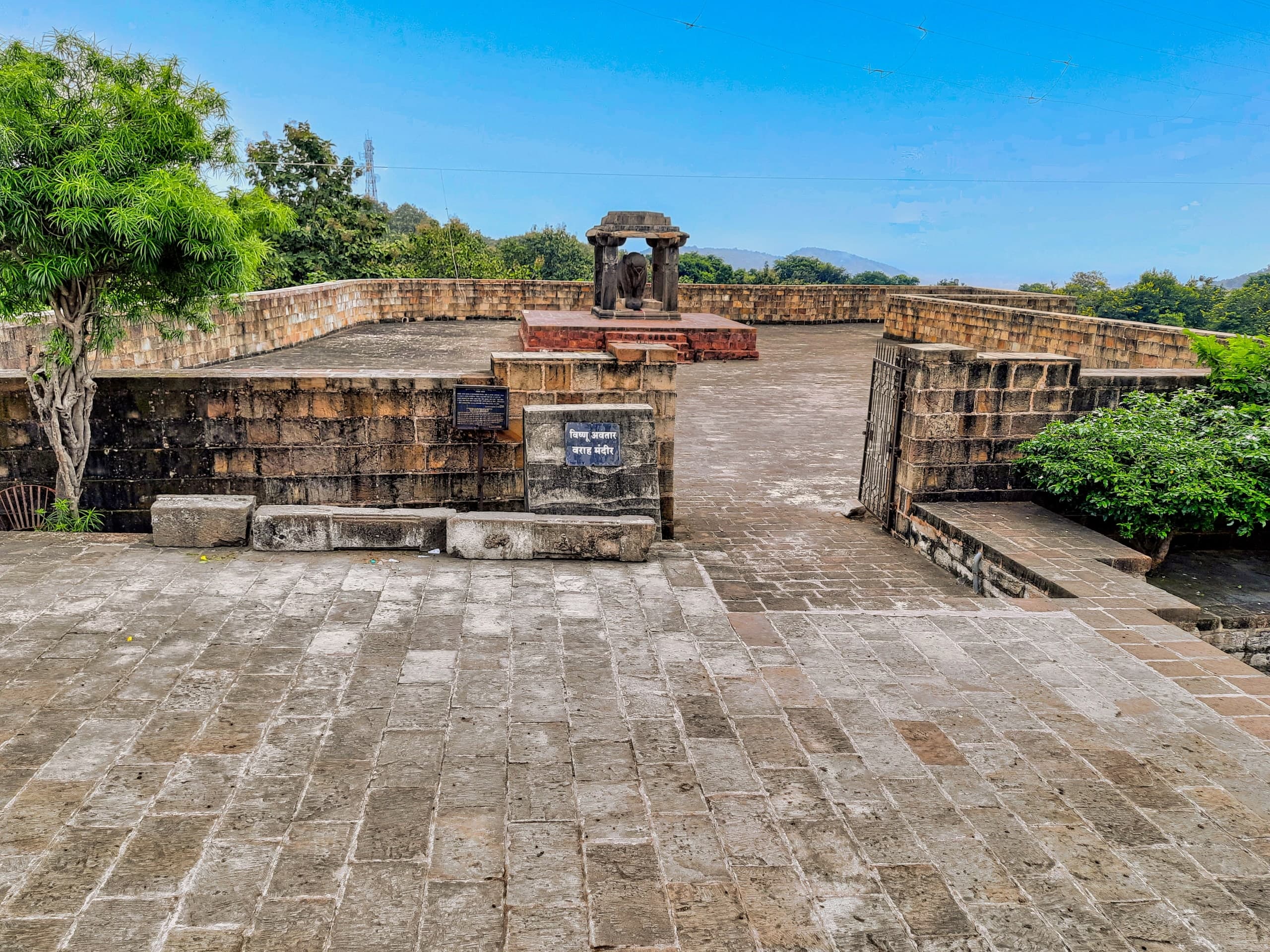
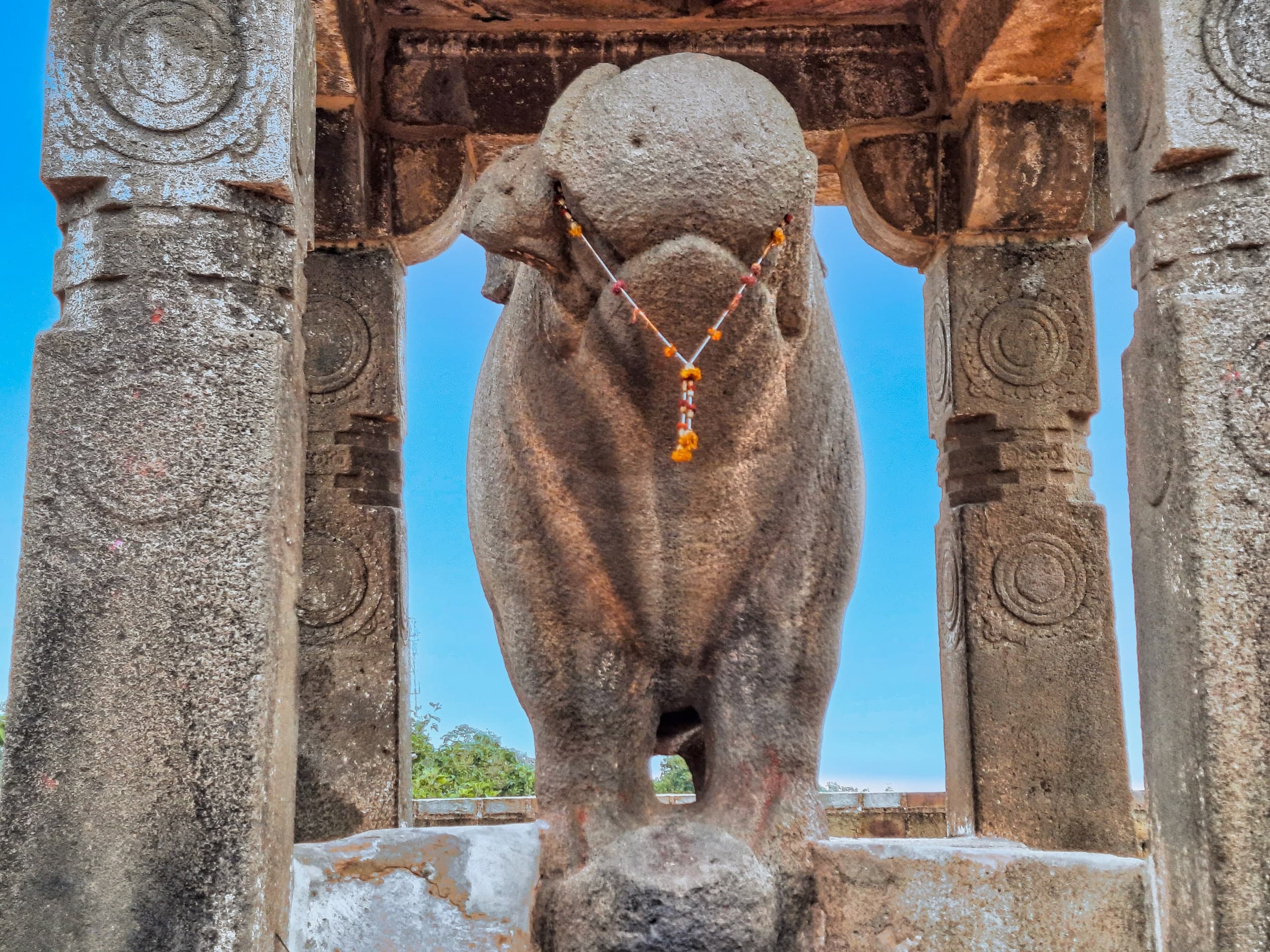
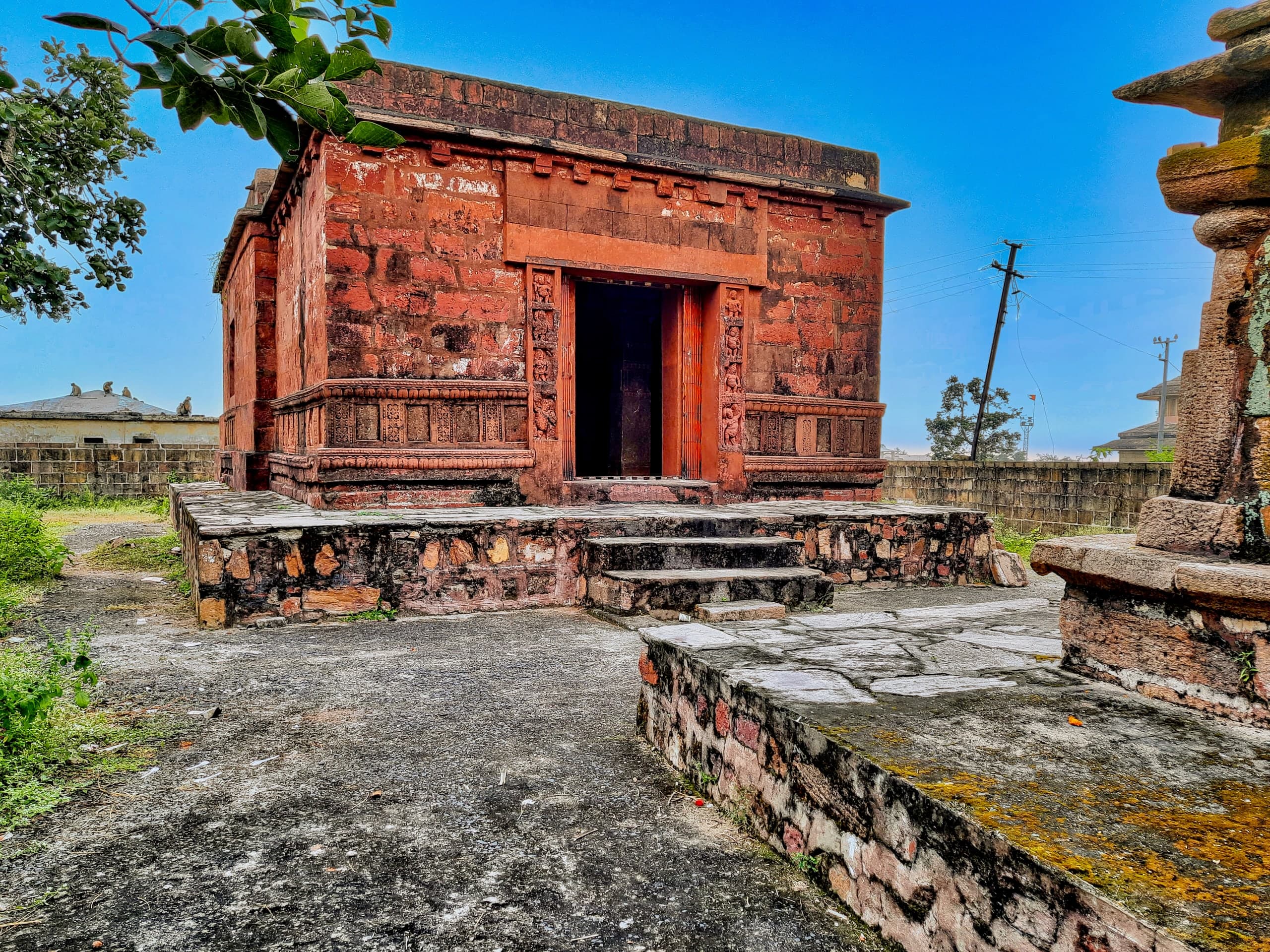
Earlier
Varāha and Rudra-Narasiṃha
5th c.
Kevala-Narasiṃha
Jamkhedkar put it in the first quarter of the century. Bakker, on stylistic grounds, preferred the middle or second half S4S9.
Later
Bhogarāma and Trivikrama
Placed later still. Bakker dates the Trivikrama temple to AD 453–457 S6.
Mansar
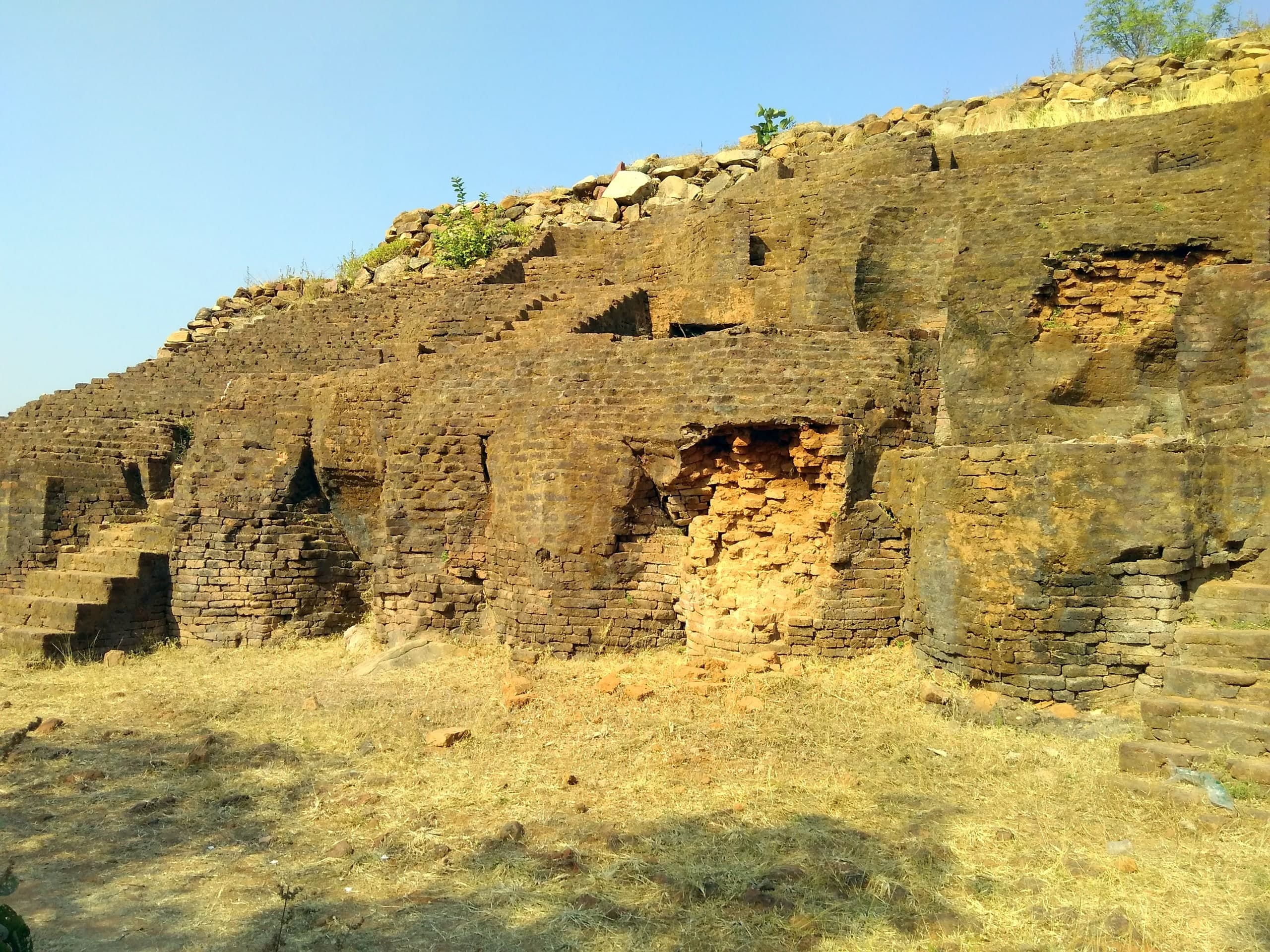
About five kilometres west of the hill (Bakker), at Mansar, Bakker identifies a temple on the mound called Hidimbā Ṭekḍī as Pravareśvara, the state sanctuary of King Pravarasena II named in his charters S9S6. The identification is his.
05 · Epigraphy
A daughter’s inscription
In 1982–83 a badly damaged fifth-century stone inscription was found under plaster in the Kevala-Narasiṃha temple. Only about a third of its text is legible S5S6.
It was first edited by A. P. Jamkhedkar, then re-edited by Bakker and Isaacson, who rejected many of his readings on metrical grounds S5S6. The readings of the donor and of the image she installed have changed from edition to edition, Bakker’s own included S6S9.
In Bakker’s present reading, the inscription records a daughter of Prabhāvatīguptā, the widow of a Gupta prince, who installed an image called Prabhāvatīsvāmin to earn merit for her dead mother, and built a reservoir called Sudarśana near the hill S9S6. Several key words are conjectural restorations, and the daughter’s name and her husband’s identity are Bakker’s conjectures S9S6.
Which temple the inscription belongs to is debated. Jamkhedkar, and Bakker in his earlier work, linked it to the Narasiṃha temple where it was found S4S9. Bakker now argues that it came from the ruined Trivikrama temple nearby, that Prabhāvatīsvāmin is that temple’s Trivikrama image, and that the broken slabs were reset during later repairs, probably in the eighteenth century S6.
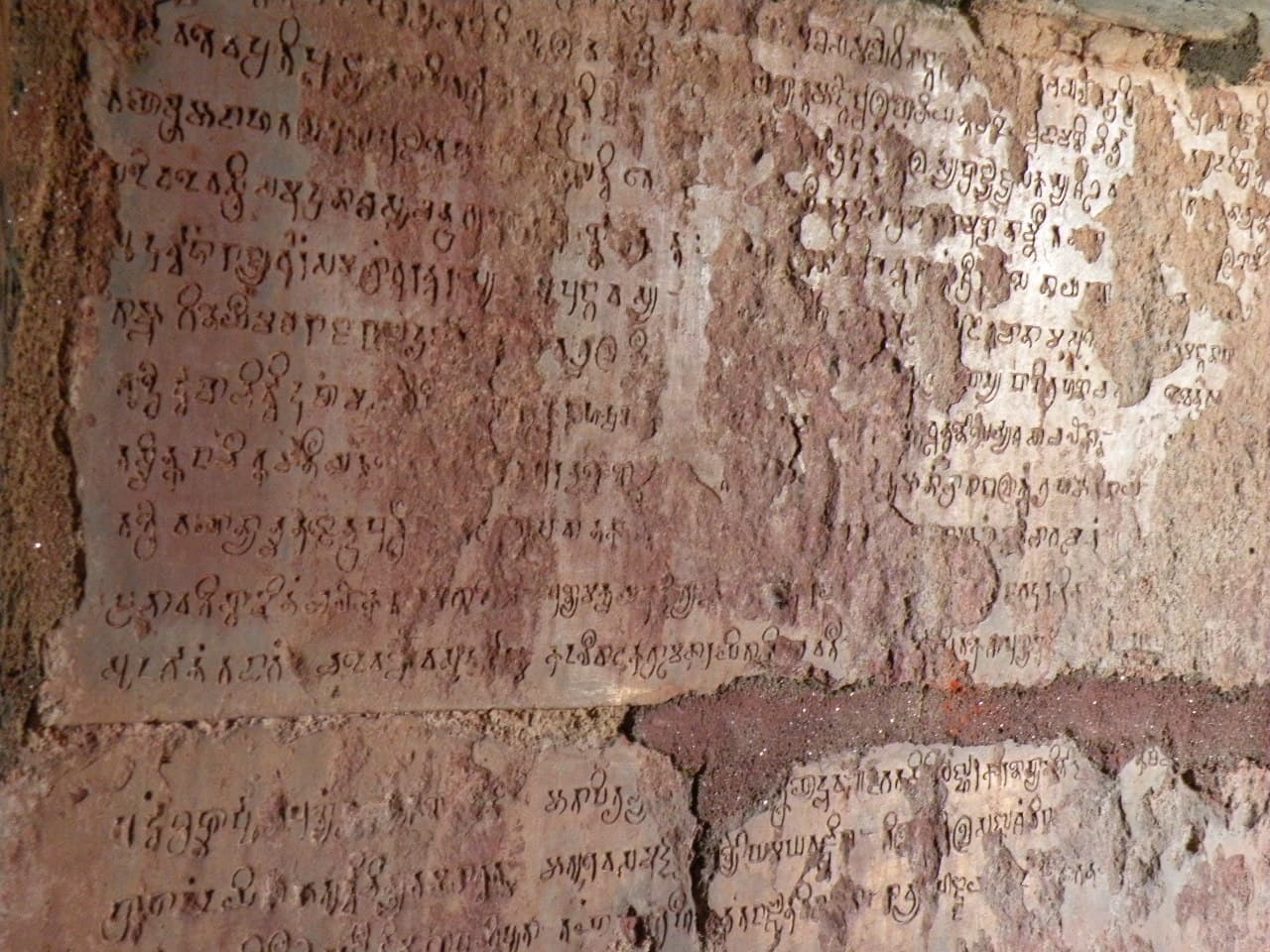
Why no text is quoted
So little of the inscription is legible, and its readings have changed so much, that this page quotes none of its wording S6.
06 · The debate
Was the Lord of Rāmagiri Rāma?
Scholars disagree. The question is not settled here.
| View | What it rests on | Status |
|---|---|---|
| Mirashi: the Lord of Rāmagiri was Rāma | He held that Rāma’s footprints were enshrined on the hill, which he identified with Kālidāsa’s Rāmagiri. He wrote in 1963, before the discoveries of the 1980s S2. | Debated |
| Bakker: the Lord was Viṣṇu, the Bhagavat | The surviving shrines are Vaiṣṇava, and the footprint tablet from Nagardhan bears Viṣṇu’s emblems. In his view a separate cult of Rāma developed only centuries later, though some worshippers may already have seen the footprints as Rāma’s S9S7. | Debated |
| Evidence of a fifth-century temple building of Rāma | None in the sources used here; none of the Vākāṭaka temples named in the inscriptions survives S2S9. | Established · no such evidence |
| The hill between about 500 and 1100 | Little evidence that it was more than a local shrine until it re-emerged as a regional pilgrimage centre in the 12th–13th centuries S7S8. | Strong inference |
Bakker in his own words
“For a cult of Rāma in Kālidāsa’s days I could find little proof.” Rāma’s connection with the hill is “not a proof of his cult in its own right, which was first to develop many centuries later” S9. He also holds that the local tradition linking the hill with Rāma “probably existed already at the beginning of the 5th century” S7. Mirashi’s case is summarised in the table above S2.
07 · Chronology
Rāma’s worship on record (c. 1240–1300)
Under the Yādava kings of Devagiri, inscriptions on the hill name the worship of Rāma explicitly, and in Bakker’s account the hill re-emerges as a pilgrimage centre S4S8.
The Lakṣmaṇa-temple inscription calls the mountain “touched by the lotus-feet of the illustrious Rāma” and “this mountain of Rāma” S4S9. That is what the inscription says; Rāma’s visit to the hill is tradition.
It also places Śambūka’s death here: killed by Rāma’s sword, he became known on the hill as Dhūmrākṣa, and his liṅga shrine, Dhūmreśvara, was still shown in 1939 S3S4S7. The inscription does not name Vālmīki’s Śaivala. The proposal that Ramtek is that mountain is a modern inference by its editors, Mirashi and Kulkarni S7S3.
It names four Rāma shrines on the hill: Ādirāma, Bhogarāma, Guptarāma and Śaṅkharāma. In Bakker’s identification, Ādirāma is probably the main Rāma temple, and older shrines such as Bhogarāma had by then been drawn into a Rāma-centred scheme S4.
The present Rāma and Lakṣmaṇa temples stand on the western spur. In Bakker’s view they probably date from the Yādava period and stand where he places the hypothesised footprint sanctuary S9S7. They have been renovated since; Mirashi noted that the Rāma temple “has not retained its original shape” S2.
5th c.
Rāmagiri
A Vākāṭaka grant is issued “from the footprints of the Lord of Rāmagiri” S1.
1240
A dated pillar inscription
One of two short Sanskrit inscriptions on the pillars of the Kevala-Narasiṃha temple is dated to the reign of King Siṃhaṇa, in a year Bakker calculates as AD 1240 S4.
c. 1240
“The worship of the illustrious Rāma”
The inscription on the other pillar records that the poet Trivikrama and his brother Rāghava “performed the worship of the illustrious Rāma” here. Bakker dates it from the record on the opposite pillar, arguing that both were cut on the same occasion S4.
Before 1264
Cakradhara at Bhogarāma
Drawing on Mahānubhāva texts, Bakker places a stay by Cakradhara, the sect’s founder, at the Bhogarāma temple, by then dedicated to Viṣṇu-Rāma and Kṛṣṇa S8.
Late 13th c.
A hymn in stone
A 75-line Sanskrit inscription in the Lakṣmaṇa temple, from the reign of the Yādava king Rāmacandra, praises Rāma and his hill S3S4.
Late 18th c.
The Sindūragiri-māhātmya
A praise-text of the hill survives in a 16-chapter version of this date. Bakker calls the thirteenth-century inscription its datable forerunner S4.
What “first recorded” means here
The pillar inscription of about 1240 is the earliest inscription naming Rāma’s worship in Bakker’s survey of the inscriptions on this hill. Its date is Bakker’s inference from the dated record beside it. It is not offered as the earliest evidence of Rāma’s worship anywhere S4.
08 · Living tradition
Later walls, fairs and living worship
The citadel that now encloses the temples, and the origin of the images worshipped in them, belong to later chapters, known mostly from a 1908 gazetteer and from scholars’ reports.
The 1908 Nagpur District Gazetteer attributes the outer gate, the Varāha Darwāzā, and the outer walls of the hilltop citadel to Raghuji I, the Bhonsle ruler of Nagpur, in the eighteenth century S12. That is a gazetteer attribution, not an inscription.
Accounts differ on where the present main images came from. Bakker cites A. P. Jamkhedkar’s report that Raghuji consecrated old images recovered from the river Sur in 1753, and questions the reliability of Jamkhedkar’s source S6. Older accounts, in the 1908 gazetteer and in the inscription’s 1939–40 edition, say the images were found in the Dudhala tank after the originals were mutilated S12S3.
Tradition gives the hill other names. Sindūragiri, “vermilion hill”, is explained in the inscription and in local tradition by the blood of the demon slain by Narasiṃha; Tapogiri, “hill of penance”, is linked with Śambūka S3S12. Cousens, cited by the inscription’s editors, suggested a natural explanation: the hill’s red stone looks blood-red when freshly broken S3.
A great fair was recorded at Ramtek in Kārttika in 1908 and 1939. In 1908 it lasted fifteen days and drew 60,000–70,000 people, and a yellow silk cloth was burnt on top of the Rāma temple on the main day S12S3. Present-day attendance is not recorded here.
In 1939 the inscription’s editors recorded that pilgrims worship the Dhūmreśvara liṅga, identified with Śambūka, before going up to the Rāma and Lakṣmaṇa temples S3. Below the hill stand Jain temples of Śāntinātha, which the 1908 gazetteer calls modern S12.
09 · Evidence
What we know, and what remains open
The poems, the inscriptions, the buildings and the tradition each carry their own evidence.
| Statement | Basis | Status |
|---|---|---|
| Vālmīki names Rāmagiri or Ramtek | Neither appears in a search of the critical text S11. | Established · absent from the critical text |
| The Meghadūta’s Rāmagiri is Ramtek | A scholarly identification: Mirashi called it certain, Bakker the most plausible; the 13th-century inscription never alludes to the poem S2S9S4. | Debated |
| The Rāmagiri of the fifth-century inscriptions is Ramtek hill | Generally accepted by historians S1S7. | Established |
| The name shows an epic association by the fifth century | Bakker’s inference from the name S9S7. | Strong inference |
| The “Lord of Rāmagiri” was Rāma | Mirashi for; Bakker reads the Lord as Viṣṇu, while allowing that some worshippers may have seen the footprints as Rāma’s S2S9S7. | Debated |
| The main fifth-century sanctuary was an open-air footprint shrine | Bakker’s hypothesis, from a footprint tablet found at Nagardhan S9S7. | Investigative claim |
| None of the surviving fifth-century shrines is a temple of Rāma | From their dedications to Varāha, Narasiṃha, Trivikrama and probably Balarāma and Kṛṣṇa S9S7. | Strong inference |
| The stone inscription came from the Trivikrama temple | Bakker’s latest argument; earlier views linked it to the Narasiṃha temple S6S9. | Debated |
| Rāma’s worship is recorded on the hill by about 1240 | A pillar inscription, dated by Bakker from the dated record on the opposite pillar S4. | Strong inference |
| The present Rāma and Lakṣmaṇa temples are Yādava work | Bakker’s dating; the buildings have been renovated since S9S7S2. | Strong inference |
| Śambūka was killed on this hill | A tradition, recorded on the hill in the 13th century; Vālmīki places the episode at Mount Śaivala S4S11. | Later tradition |
| Raghuji I built the outer walls and gate | An attribution in the 1908 gazetteer S12. | Strong inference |
Open questions
These are gaps in the surviving record rather than settled conclusions. Each remains open until primary documentation or published scholarship closes it.
- What the fifth-century main sanctuary looked like; no excavation of the western spur has tested Bakker’s hypothesis.
- The two-thirds of the fifth-century stone inscription that cannot be read.
- What happened on the hill between about 500 and 1100.
- How much of the Rāma and Lakṣmaṇa temples is Yādava work and how much Bhonsle.
- Where the present main images came from.
- The Mansar excavation reports, which were not consulted for this page.
- Present-day fair practice and attendance.
10 · Sources
Source library
Every citation on this page links here.
- S1Primary inscription5th c.; ed. 1963
Ṛddhapur plates of Prabhāvatīguptā, year 19 of Pravarasena II (CII V, No. 8)
The fifth-century name Rāmagiri and the grant issued “from the footprints of the Lord of Rāmagiri”.
Open indexed source ↗ - S2Indian scholarship1963
Introduction to Corpus Inscriptionum Indicarum vol. V: Inscriptions of the Vākāṭakas
Mirashi’s reading of the “Lord of Rāmagiri” as Rāma, and his identification of Ramtek with Kālidāsa’s Rāmagiri.
Open indexed source ↗ - S3Primary inscriptionlate 13th c.; ed. 1939–40
Ramtek stone inscription of the time of Rāmachandra
The Lakṣmaṇa-temple inscription: its find-spot, date, the hill’s names, the Śambūka tradition and the fair as recorded in 1939.
Open indexed source ↗ - S4International scholarship2019 (1989)
The Ramtek Inscriptions I
The Yādava pillar inscriptions of c. 1240 and the Lakṣmaṇa-temple inscription.
Open indexed source ↗ - S5International scholarship2019 (1993)
The Ramtek Inscriptions II: the Vākāṭaka inscription in the Kevala-Narasiṃha Temple
The discovery and editions of the fifth-century stone inscription.
Open indexed source ↗ - S6International scholarship2019 (2010–13)
A New Interpretation of Rāmagiri Evidence
Bakker’s latest reading of the stone inscription, the Trivikrama temple and Mansar.
Open indexed source ↗ - S7International scholarship2019
Rāma’s Hill: transgression and atonement on a hill in the south
Bakker’s method, the Śambūka tradition, the footprint tablet and the Narasiṃha images.
Open indexed source ↗ - S8International scholarship2019 (1992)
Throne and Temple: political power and religious prestige in Vidarbha
Ramtek as a Yādava-period pilgrimage centre; Cakradhara at the Bhogarāma temple.
Open indexed source ↗ - S9International scholarship1997
The Vākāṭakas: An Essay in Hindu Iconology
Bakker’s synthesis of the hill’s Vākāṭaka monuments and of Rāma’s connection with the hill.
Open indexed source ↗ - S10Primary textc. 5th c.; ed. 1970
Meghadūta
The poem’s Rāmagiri, its hermitages and Rāma’s footprints (vv. 1, 12).
Open indexed source ↗ - S11Primary text1960–75
Vālmīki Rāmāyaṇa, Critical Edition — Uttarakāṇḍa
The Śambūka episode at Mount Śaivala, and the absence of Rāmagiri from the critical text.
Open indexed source ↗ - S12Archival record1908
Central Provinces District Gazetteers: Nagpur District, Vol. A
What was seen and said at Ramtek in 1908: position, walls, local traditions and the Kārttika fair.
Open indexed source ↗