VEDIC RISHI
अत्रि
Atri
A foundational Vedic seer whose family preserves hymns of praise, protection and the restoration of light.
- Era
- Vedic antiquity · date unknown
- Known for
- Vedic rishi · Dharma
WHY ATRI MATTERS
A family of seers and the recovery of light
Atri is remembered as one of the great Vedic seers and as the ancestral name of an important poetic family. The fifth mandala of the Rigveda is associated with the Atris, while later genealogies count Atri among the Saptarishis and connect him with Anasuya and their celebrated sons.
LIFE & HISTORICAL RECORD
A family of seers and the recovery of light
The strongest historical ground for Atri is not a modern life story but the Atri family collection in Rigveda Mandala 5. Its hymns address several deities and preserve a living school of poetic and ritual expertise.
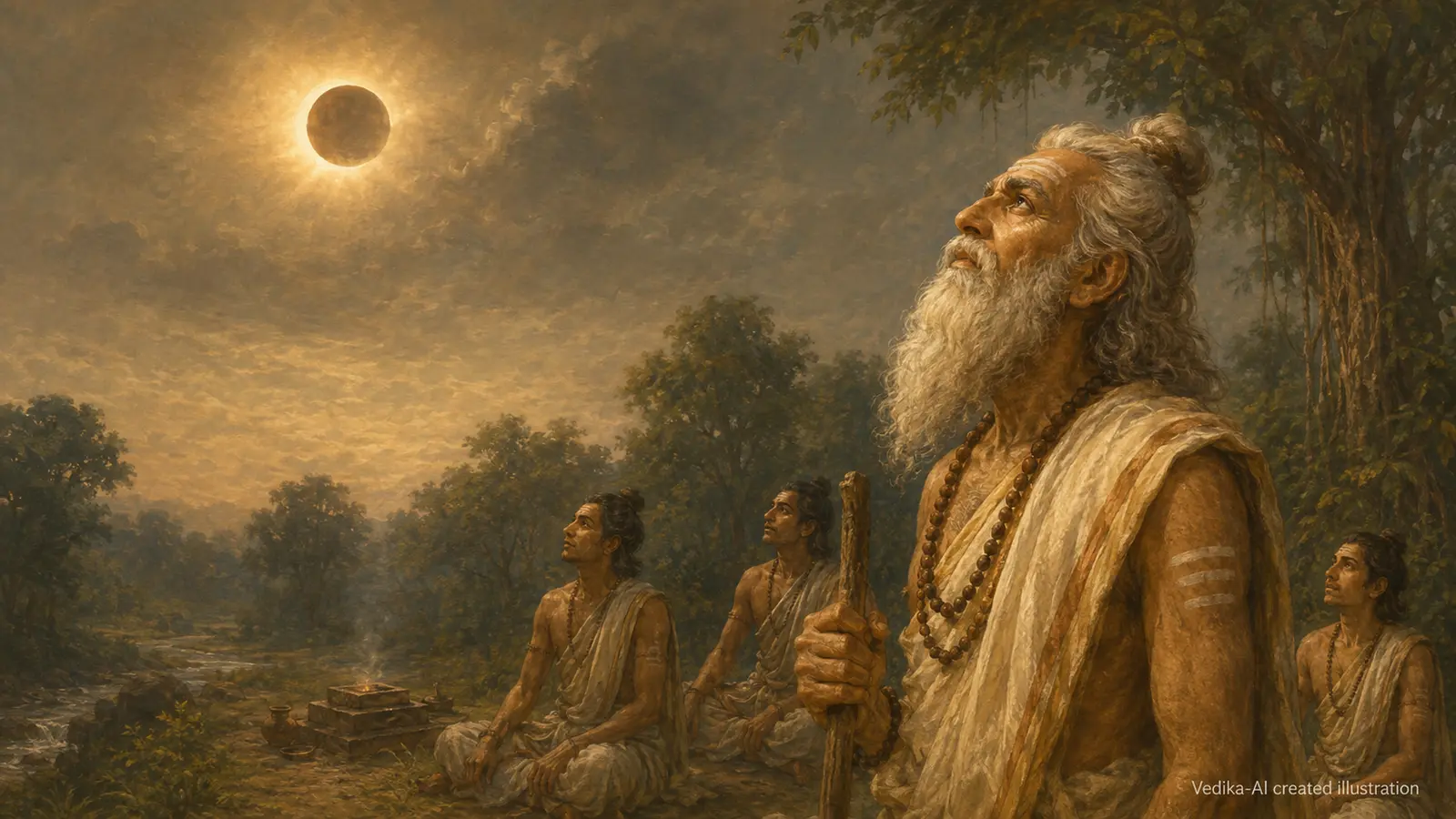
One striking episode tells of the Atris restoring the sun hidden by Svarbhanu. Whether read ritually, poetically or in relation to an eclipse, the hymn presents sacred speech as a recovery of order and visibility.
The name behind a Vedic lineage
Vedic attribution often works through families rather than modern individual authorship. “Atri” may name an ancestral seer whose descendants and school continued composing under an inherited identity.
What the record leaves open
Later texts supply a fuller sacred household: Atri, his wife Anasuya and sons including Dattatreya in several traditions. These stories are central to devotional memory, but they should not be read back as a datable biography of the Rigvedic poet.
CORE TEACHINGS
Three threads to carry with you
The Atri hymns join praise with discernment. Their religious world assumes that truth, order and illumination require disciplined speech, inherited learning and right relation with the powers sustaining life.
The recovered-sun image remains powerful because obscurity is both cosmic and inward. Wisdom does not manufacture the sun; it helps remove what prevents light from being seen.
Atri lineage
Mandala 5 preserves the work of a Vedic poetic family rather than a complete individual biography.
Restored sun
The Svarbhanu hymn makes the recovery of light an image of sacred knowledge overcoming obscuration.
Practice cue
Name one confusion clearly before trying to solve it; accurate seeing is already part of restoration.
WORKS & PRACTICES
Mandala 5 and expanding tradition
Rigveda Mandala 5 is the primary textual home of the Atri family. Later dharma, Puranic and devotional materials expand the name into multiple genealogies and theological roles. Readers should therefore resist searching for one “book by Atri.” His enduring work is a transmitted Vedic corpus and the authority of a lineage that later communities continued to reinterpret.
Rigveda, Mandala 5
Primary-text translation used for the Atri family collection and the hymn concerning Svarbhanu and the hidden sun.
Encyclopaedia Britannica: Atri
Reference overview used for the distinction between the Vedic seer, the Atri lineage and later Saptarishi and family traditions.
RELEVANCE TODAY
Why he matters now
Atri matters because the archive of wisdom is often collaborative and intergenerational. The modern desire for a single heroic author can obscure the schools, families and communities through which sacred language survived. The image of returning light also offers a practical ethic: spiritual knowledge proves itself by restoring perception, not merely by claiming inherited status.
SOURCES & FURTHER READING
Follow the record
Rigveda, Mandala 5
Primary-text translation used for the Atri family collection and the hymn concerning Svarbhanu and the hidden sun.
Open primary text ↗Encyclopaedia Britannica: Atri
Reference overview used for the distinction between the Vedic seer, the Atri lineage and later Saptarishi and family traditions.
Open scholarly reference ↗CONTINUE THE JOURNEY