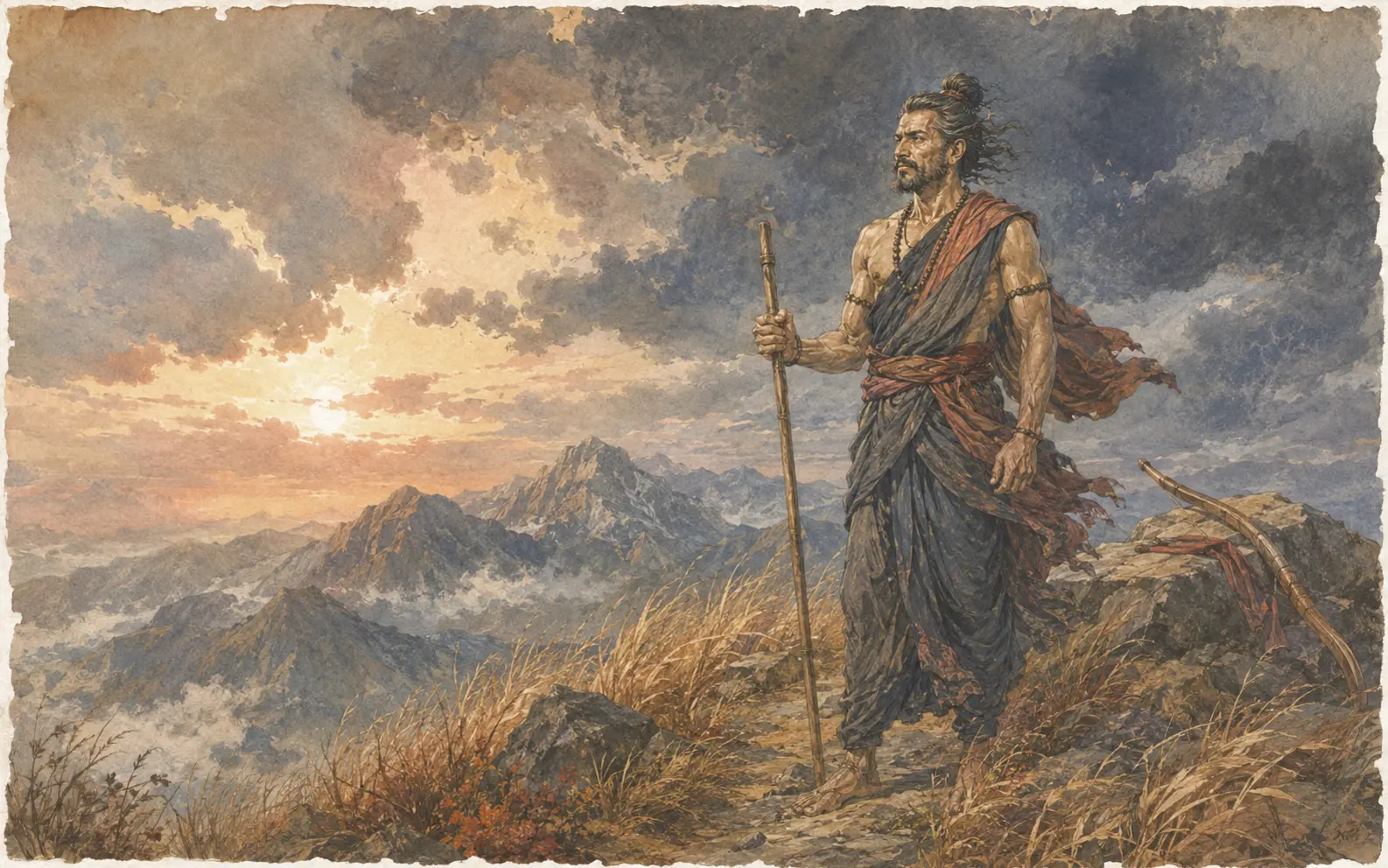
RISHI
विश्वामित्र
Vishvamitra
The royal sage associated with the Gayatri Mantra and a life of profound transformation.
- Era
- Vedic period
- Known for
- Rishi · Dharma
WHY VISHVAMITRA MATTERS
A figure of transformation and sacred speech
Vishvamitra is remembered as a seer of the Rigveda and, in later epic tradition, as a king who became a Brahmarishi through fierce discipline. Vedika keeps those registers distinct: the Vedic record preserves hymnic association, while the transformation story is carried mainly by later narrative tradition.
LIFE & HISTORICAL RECORD
A figure of transformation and sacred speech
The name Vishvamitra stands near one of the most widely recited verses in Hindu life: Rigveda 3.62.10, later known as the Gayatri Mantra. The third mandala of the Rigveda is traditionally associated with the Vishvamitra family of seers.
The later epic imagination remembers him as a ruler whose conflict, austerity and aspiration gradually transform him into a sage. The spiritual force of the story is strong, but it belongs to a different evidence layer than the early hymn record.
From royal power to spiritual authority
The Rigvedic layer gives us a seer-name and a family association, not a modern biography. Later texts, especially the Ramayana and Puranic traditions, develop the account of King Kaushika becoming Vishvamitra after encounters with Vasistha and long tapas.
What the record leaves open
Those stories dramatize a change in the source of authority. Power over others gives way, imperfectly and painfully, to mastery of oneself. Historically, the details are traditional rather than securely documented.
CORE TEACHINGS
Three threads to carry with you
Vishvamitra’s legacy gathers around tapas, mantra and transformation. The story does not make transformation sentimental: ambition, rivalry, failure and renewed effort all remain part of the path.
The Gayatri verse turns the mind toward illumination. The point is not merely to recite sacred words, but to let attention become worthy of them.
Transformation is earned
Growth is remembered as discipline over time, not instant spiritual status.
Mantra needs attention
Sacred sound asks for a refined mind, ethical care and repeated return.
Power must be purified
Royal force becomes spiritually meaningful only when transformed by tapas.
WORKS & PRACTICES
Hymns, Gayatri and tapas
The Vishvamitra family is associated with the third mandala of the Rigveda. The most famous verse is Rigveda 3.62.10, later central to Gayatri practice across many Hindu lineages. A responsible practice note distinguishes the early Vedic verse from the full later ritual, initiatory and devotional traditions that grew around it.
Rigveda 3.62.10
The Savitri verse later celebrated as the Gayatri Mantra.
Tapas narratives
Epic and Puranic stories of austerity, rivalry and transformation.
Practice lens
Illumination begins as a request: may understanding itself be brightened.
RELEVANCE TODAY
The courage to outgrow yourself
Vishvamitra speaks strongly to modern seekers because his story does not begin with purity. It begins with force, pride and hunger for recognition, then asks whether that energy can be converted into clarity. For Vedika readers, he is a layered archive: Vedic seer-name, mantra lineage and traditional biography about becoming more than the identity one started with.
SOURCES & FURTHER READING
Follow the record
Rigveda 3.62
Vedic hymn context for the Savitri verse associated with the Vishvamitra lineage.
Open primary text ↗Valmiki Ramayana
Epic narrative setting for Vishvamitra’s role in Rama’s early story.
Open primary text ↗Vishvamitra overview
Reference overview for Vedic, epic and Puranic layers.
Open scholarly reference ↗CONTINUE THE JOURNEY